
Understanding the Difference Between a Roof Leak and Simple Attic Condensation
Finding moisture in your attic creates immediate panic. Is water dripping from your ceiling a sign of a failing roof or just Oklahoma’s notorious humidity at work? Understanding the difference between a roof leak and attic condensation saves you time money and unnecessary stress. Finding a Reliable Roofing Company Near You in Moore Oklahoma.
Oklahoma’s extreme weather creates unique attic moisture challenges. Our rapid temperature swings high summer humidity and frequent winter freezes cause condensation that mimics roof leaks. A true roof leak comes from damaged shingles or flashing and appears as localized water intrusion. Condensation forms when warm moist air meets cold attic surfaces creating widespread dampness and frost patterns. Why Local Nichols Hills Residents Choose Our Luxury Roofing Team.
The key difference lies in timing location and appearance. Roof leaks worsen during heavy rain or storms and create isolated wet spots. Condensation builds gradually during temperature changes and affects entire attic sections. This guide helps you diagnose your moisture problem before calling for help.
Why Homeowners Confuse Condensation with Roof Leaks
Oklahoma’s climate creates perfect conditions for attic condensation confusion. Our summer humidity often exceeds 70% while winter temperatures drop below freezing. When warm indoor air rises through your ceiling it meets cold attic surfaces creating condensation that drips like a leak.
Common culprits include bathroom exhaust fans venting into attics instead of outdoors. This practice remains surprisingly common in older Oklahoma homes built before modern building codes. The warm moist air from showers accumulates in cold attics forming frost or water droplets that melt during temperature changes.
Attic insulation problems compound the issue. When insulation settles or gets displaced it creates cold spots where condensation forms. Oklahoma’s expansive clay soil causes foundation movement that can shift attic structures creating gaps in insulation coverage.
Key Signs of Attic Condensation in Oklahoma Homes
Condensation creates distinct patterns that help identify the problem. Look for widespread moisture rather than isolated spots. You’ll find dampness across multiple rafters or sheathing sections rather than one concentrated area.
During winter months check for frost patterns on nails or metal components. These frost formations indicate temperature differentials causing condensation. As temperatures rise the frost melts creating the appearance of active leaking.
Mold growth patterns reveal condensation sources. Unlike leak-related mold which stays near water entry points condensation mold spreads across larger areas. You’ll notice fuzzy white or black patches on wood surfaces particularly near vents or light fixtures.
Musty odors indicate long-term moisture issues. Condensation creates persistent dampness that leads to mildew growth. The smell intensifies during humid weather when moisture levels peak.
Telltale Signs of a Roof Leak After an OKC Storm
Roof leaks follow predictable patterns after Oklahoma’s severe weather. Water enters through damaged shingles flashing or roof penetrations then travels along rafters before dripping through ceilings. The entry point often sits several feet from visible water damage inside.
Check your ceiling for circular water stains with darker centers. These stains indicate water pooling then finding escape routes through drywall. The rings show repeated wetting and drying cycles common with active leaks.
Examine your attic during rainfall for active dripping. True leaks produce consistent water flow that continues as long as precipitation persists. You’ll see water trails along wood surfaces or active drips from specific locations.
Shingle damage provides obvious clues. Missing or cracked shingles especially after Oklahoma’s frequent hailstorms create direct water entry points. Check valleys around chimneys and near roof penetrations where flashing often fails.
The Flashlight Test: A DIY Diagnostic Guide
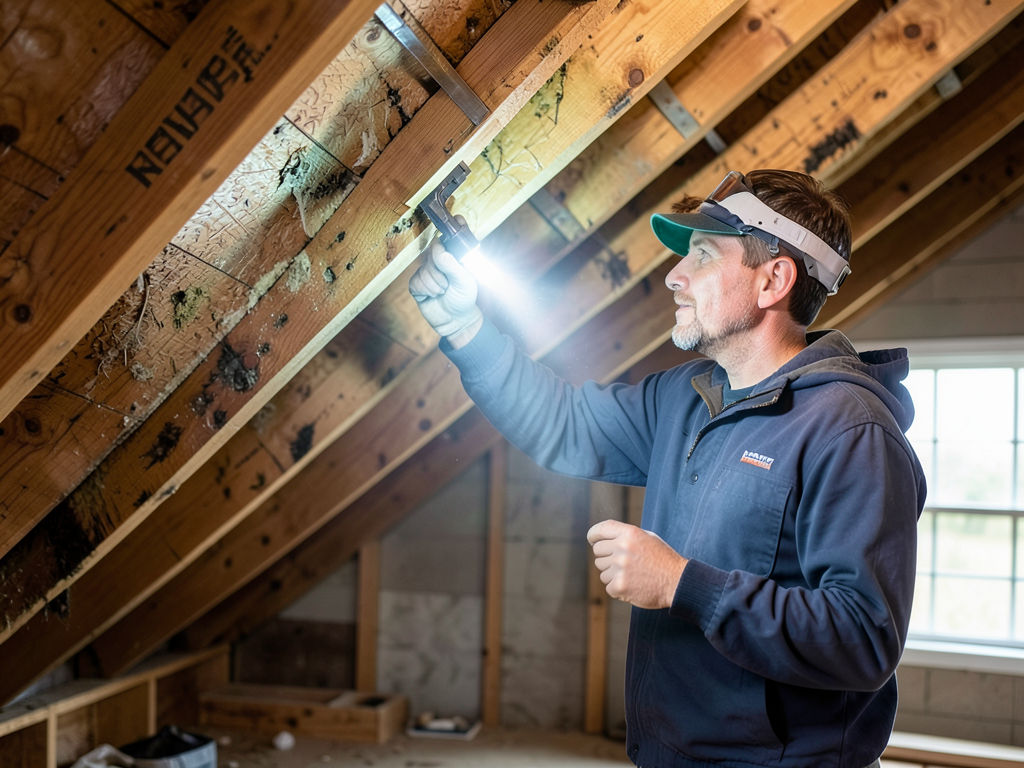
Performing a simple flashlight inspection reveals moisture sources. Wait for a dry day then enter your attic with a bright flashlight. Look for these diagnostic signs.
Check nail heads for rust or frost. Rusty nails indicate prolonged moisture exposure while frosty nails signal active condensation. Oklahoma’s temperature swings cause nails to become cold enough for condensation formation even when surrounding wood stays dry.
Examine wood surfaces for dark spots or discoloration. Water stains appear as darkened areas where moisture has penetrated wood fibers. Fresh stains feel damp while older stains remain dry but discolored.
Look for water trails on rafters and sheathing. Active leaks create visible paths where water travels downward. These trails often lead to collection points where water pools before finding exit routes.
Check insulation for wet spots or compression. Waterlogged insulation loses effectiveness and creates ideal conditions for mold growth. Oklahoma’s humidity makes proper attic ventilation crucial for preventing insulation problems.
Why Oklahoma’s Humidity Makes a Difference
Oklahoma City’s average relative humidity ranges from 65% in winter to 75% in summer. This moisture-laden air creates unique attic challenges. When outdoor temperatures drop below indoor temperatures condensation forms on any surface cold enough to reach the dew point.
The dew point calculation matters for attic health. When outdoor air at 70% humidity cools below 60°F condensation forms on surfaces at or below that temperature. Oklahoma’s rapid weather changes often create these conditions unexpectedly. What You Can Expect to Pay for a Roof Replacement in Edmond.
Summer thunderstorms compound humidity problems. When hot humid air enters attics through vents it meets cooler surfaces creating condensation. Oklahoma’s frequent storm systems mean attics experience constant temperature and humidity fluctuations.
Winter freezes create ice damming risks. When snow melts on warm roof sections then refreezes at edges it creates barriers forcing water under shingles. This process differs from condensation but creates similar interior moisture problems.
Risks of Ignoring Moisture in Your Attic
Both leaks and condensation create serious problems when ignored. Wood rot develops when moisture content exceeds 20% for extended periods. Oklahoma’s climate accelerates this process due to frequent humidity and temperature changes.
Mold growth poses health risks to your family. Common attic molds include Aspergillus Penicillium and Stachybotrys. These organisms release spores that trigger allergies asthma and respiratory issues especially problematic for children and elderly residents.
Structural damage progresses silently. Wet wood loses strength losing up to 50% of its load-bearing capacity when saturated. Oklahoma’s high winds and occasional earthquakes make compromised roof structures dangerous.
Energy efficiency suffers dramatically. Wet insulation loses R-value dropping from R-30 to R-5 when saturated. This forces HVAC systems to work harder increasing utility costs during Oklahoma’s extreme temperature seasons.
When to Call a Professional Oklahoma City Roofer
Certain situations require immediate professional attention. Active leaks during rainfall need emergency repair to prevent interior damage. If water drips through your ceiling or runs down walls call (405) 507-3933 immediately. EPA Mold Information.
Extensive mold growth covering more than 10 square feet requires professional remediation. Oklahoma’s climate makes mold particularly aggressive requiring specialized removal techniques and protective equipment.
Structural concerns like sagging roof decks or cracked rafters need expert evaluation. These issues indicate serious problems that could lead to roof collapse during Oklahoma’s severe weather events.
Unknown moisture sources warrant professional diagnosis. If you cannot determine whether you have a leak or condensation a thorough inspection identifies the problem and recommends appropriate solutions.
Preventing Future Moisture Problems
Proper attic ventilation prevents most condensation issues. Oklahoma homes need balanced intake and exhaust ventilation. Soffit vents draw cool air in while ridge vents allow hot moist air to escape. This airflow keeps attic temperatures closer to outdoor temperatures reducing condensation risk.
Insulation plays a crucial role in moisture control. Oklahoma’s climate zone requires R-38 to R-49 attic insulation depending on your specific location. Proper insulation prevents heat transfer that creates condensation surfaces.
Exhaust fan installation must follow building codes. Bathroom and kitchen fans should vent directly outdoors through insulated ducts. Venting into attics remains a common violation in older Oklahoma homes contributing to moisture problems.
Regular roof maintenance prevents leak development. Oklahoma’s severe weather damages shingles flashing and sealants. Annual inspections identify problems before they cause interior damage.
Cost Considerations for Moisture Repairs
Repair costs vary significantly based on the moisture source. Simple ventilation improvements cost $500-$1500 while mold remediation ranges from $2000-$6000 depending on extent. Roof leak repairs typically cost $300-$2000 based on damage severity.
Condensation prevention often proves more cost-effective than leak repairs. Installing proper ventilation and correcting exhaust fan issues prevents recurring problems. These improvements pay for themselves through reduced energy costs and prevented damage.
Insurance coverage differs between leaks and condensation. Most policies cover sudden accidental damage but exclude long-term moisture problems from poor maintenance. Understanding your coverage helps plan appropriate repairs.
DIY repairs work for minor issues but professional help ensures proper diagnosis. Misdiagnosing condensation as a leak leads to unnecessary roof repairs while ignoring actual leaks causes escalating damage.
Frequently Asked Questions
How can I tell if my attic moisture is from a leak or condensation?
Check timing and location patterns. Leaks worsen during rain and create isolated spots. Condensation builds gradually during temperature changes and affects wider areas. Frost on nails or widespread dampness indicates condensation while active dripping during storms signals a leak.
Is attic condensation covered by homeowners insurance in Oklahoma?
Most policies exclude condensation from poor ventilation or maintenance as a long-term moisture issue. However if condensation leads to sudden damage like ceiling collapse some coverage may apply. Review your specific policy or consult your insurance agent.
How much does professional attic moisture inspection cost in OKC?
Professional inspections typically cost $150-$400 depending on attic accessibility and inspection scope. Many reputable roofers offer free inspections with repair estimates. Call (405) 507-3933 to schedule your assessment. The Best Norman OK Roofers for Emergency Storm Damage Fixes.
Can I fix attic condensation myself or do I need a professional?
Simple fixes like improving insulation or correcting exhaust fan venting work as DIY projects. However extensive mold growth structural damage or unknown moisture sources require professional diagnosis and repair to ensure safety and effectiveness.
How long does it take for attic moisture to cause serious damage?
Wood rot begins when moisture content stays above 20% for more than 30 days. Mold grows within 24-48 hours of moisture exposure. Structural damage accelerates in Oklahoma’s climate due to frequent humidity and temperature changes.
Take Action Before Minor Moisture Becomes Major Damage
Moisture problems never improve on their own. What starts as minor condensation or a small leak quickly escalates into structural damage mold growth and expensive repairs. Oklahoma’s extreme weather makes timely intervention crucial.
Don’t wait until water drips through your ceiling. Early diagnosis prevents thousands in repair costs and protects your family’s health. Our experienced technicians identify moisture sources accurately and recommend cost-effective solutions.
Call (405) 507-3933 today to schedule your professional attic inspection. We serve Oklahoma City and surrounding communities with emergency service available 24/7. Our team provides honest assessments and transparent pricing with no high-pressure sales tactics.
Protect your home investment and your family’s health. One call now prevents major headaches later. Pick up the phone and call (405) 507-3933 before the next storm hits or condensation worsens. For more information, visit FEMA Ice Dam Prevention.
{
“@context”: “https://schema.org”,
“@type”: “BlogPosting”,
“headline”: “Understanding the Difference Between a Roof Leak and Simple Attic Condensation”,
“description”: “Learn to identify attic condensation vs roof leaks in Oklahoma homes. Discover diagnostic steps, moisture patterns, and when to call (405) 507-3933 for professional help.”,
“wordCount”: 1815,
“datePublished”: “2026-04-04T15:48:00.000Z”,
“dateModified”: “2026-04-04T15:48:00.000Z”,
“inLanguage”: “en-US”,
“mainEntityOfPage”: {
“@type”: “WebPage”,
“@id”: “https://unitedroofingoklahomacity.com”
},
“publisher”: {
“@type”: “LocalBusiness”,
“name”: “United Roofing Oklahoma City”,
“url”: “https://unitedroofingoklahomacity.com”
},
“author”: {
“@type”: “Organization”,
“name”: “United Roofing Oklahoma City”,
“url”: “https://unitedroofingoklahomacity.com”
},
“image”: {
“@type”: “ImageObject”,
“url”: “https://unitedroofingoklahomacity.com/wp-content/uploads/2026/03/understanding-the-difference-between-a-roof-leak-a-1.png”
}
}
{
“@context”: “https://schema.org”,
“@type”: “RoofingContractor”,
“name”: “United Roofing Oklahoma City”,
“url”: “https://unitedroofingoklahomacity.com”,
“address”: {
“@type”: “PostalAddress”,
“addressLocality”: “Oklahoma City”
},
“areaServed”: {
“@type”: “City”,
“name”: “Oklahoma City”
}
}
{
“@context”: “https://schema.org”,
“@type”: “FAQPage”,
“mainEntity”: [
{
“@type”: “Question”,
“name”: “How can I tell if my attic moisture is from a leak or condensation?”,
“acceptedAnswer”: {
“@type”: “Answer”,
“text”: “Check timing and location patterns. Leaks worsen during rain and create isolated spots. Condensation builds gradually during temperature changes and affects wider areas. Frost on nails or widespread dampness indicates condensation while active dripping during storms signals a leak.”
}
},
{
“@type”: “Question”,
“name”: “Is attic condensation covered by homeowners insurance in Oklahoma?”,
“acceptedAnswer”: {
“@type”: “Answer”,
“text”: “Most policies exclude condensation from poor ventilation or maintenance as a long-term moisture issue. However if condensation leads to sudden damage like ceiling collapse some coverage may apply. Review your specific policy or consult your insurance agent.”
}
},
{
“@type”: “Question”,
“name”: “How much does professional attic moisture inspection cost in OKC?”,
“acceptedAnswer”: {
“@type”: “Answer”,
“text”: “Professional inspections typically cost $150-$400 depending on attic accessibility and inspection scope. Many reputable roofers offer free inspections with repair estimates. Call (405) 507-3933 to schedule your assessment. The Best Norman OK Roofers for Emergency Storm Damage Fixes.”
}
},
{
“@type”: “Question”,
“name”: “Can I fix attic condensation myself or do I need a professional?”,
“acceptedAnswer”: {
“@type”: “Answer”,
“text”: “Simple fixes like improving insulation or correcting exhaust fan venting work as DIY projects. However extensive mold growth structural damage or unknown moisture sources require professional diagnosis and repair to ensure safety and effectiveness.”
}
},
{
“@type”: “Question”,
“name”: “How long does it take for attic moisture to cause serious damage?”,
“acceptedAnswer”: {
“@type”: “Answer”,
“text”: “Wood rot begins when moisture content stays above 20% for more than 30 days. Mold grows within 24-48 hours of moisture exposure. Structural damage accelerates in Oklahoma’s climate due to frequent humidity and temperature changes.”
}
}
]
}
{
“@context”: “https://schema.org”,
“@type”: “BreadcrumbList”,
“itemListElement”: [
{
“@type”: “ListItem”,
“position”: 1,
“name”: “Home”,
“item”: “https://unitedroofingoklahomacity.com”
},
{
“@type”: “ListItem”,
“position”: 2,
“name”: “Blog”,
“item”: “https://unitedroofingoklahomacity.com/blog”
},
{
“@type”: “ListItem”,
“position”: 3,
“name”: “Understanding the Difference Between a Roof Leak and Simple Attic Condensation”
}
]
}
{
“@context”: “https://schema.org”,
“@type”: “Service”,
“serviceType”: “Roofing”,
“provider”: {
“@type”: “LocalBusiness”,
“name”: “United Roofing Oklahoma City”,
“url”: “https://unitedroofingoklahomacity.com”
},
“areaServed”: {
“@type”: “City”,
“name”: “Oklahoma City”
},
“description”: “Learn to identify attic condensation vs roof leaks in Oklahoma homes. Discover diagnostic steps, moisture patterns, and when to call (405) 507-3933 for professional help.”
}