menu

Spray Foam Roofing in Oklahoma City – Reduce Energy Costs and Protect Business Continuity

Commercial SPF roofing systems cut cooling expenses and eliminate downtime from Oklahoma City's volatile weather, delivering seamless waterproofing and thermal efficiency for warehouses, retail centers, and industrial facilities.

Slider Image 1
Slider Image 2
Slider Image 3
Slider Image 4
Slider Image 5
Slider Image 7
Slider Image 8
Slider Image 9
Slider Image 10
Slider Image 11

Why Oklahoma City's Climate Demands High-Performance Commercial Roofing

Oklahoma City sits in the heart of tornado alley, where wind-driven rain, hailstorms, and temperature swings from freezing to over 100 degrees create constant stress on commercial roof systems. Traditional built-up roofing and single-ply membranes develop seam failures, membrane shrinkage, and ponding water after just a few seasons. These vulnerabilities lead to interior water damage, inventory loss, and interrupted operations during critical business periods.

The clay soil underneath commercial properties here expands and contracts with moisture changes, causing structural movement that opens gaps in conventional roofing assemblies. Add in the intense UV exposure from Oklahoma's 230 sunny days per year, and you face accelerated material degradation that shortens roof lifespan and increases maintenance frequency.

Commercial spray foam roofing addresses these specific challenges through monolithic application. The polyurethane foam roofing system bonds directly to existing substrates, creating a seamless barrier that flexes with building movement and resists wind uplift rated for Oklahoma City's severe weather zones. SPF roofing eliminates the seams and fastener penetrations that fail first in traditional systems. The closed-cell structure blocks moisture infiltration while providing superior R-value per inch, reducing the cooling load on HVAC systems during the extended Oklahoma summer. For facility managers and property owners focused on operational reliability and energy efficiency, an SPF roof system delivers quantifiable ROI through lower utility bills and reduced emergency repair costs.

Why Oklahoma City's Climate Demands High-Performance Commercial Roofing
How Spray Polyurethane Foam Roofing Outperforms Conventional Systems

How Spray Polyurethane Foam Roofing Outperforms Conventional Systems

Spray foam roofing works through a chemical reaction between isocyanate and polyol components mixed at the application nozzle. The liquid expands approximately 30 times its volume within seconds, filling gaps, conforming to irregular surfaces, and creating a rigid insulating layer. This differs fundamentally from mechanically attached or adhered membrane systems that rely on seams and fasteners, which become failure points.

The application process begins with surface preparation. We remove loose debris, repair structural damage, and ensure the substrate is dry. Moisture content testing is critical because trapped moisture under SPF roofing will cause blistering and delamination. Once the deck meets specifications, we apply foam in multiple passes to achieve the specified thickness, typically 1.5 to 3 inches for commercial applications in Oklahoma City.

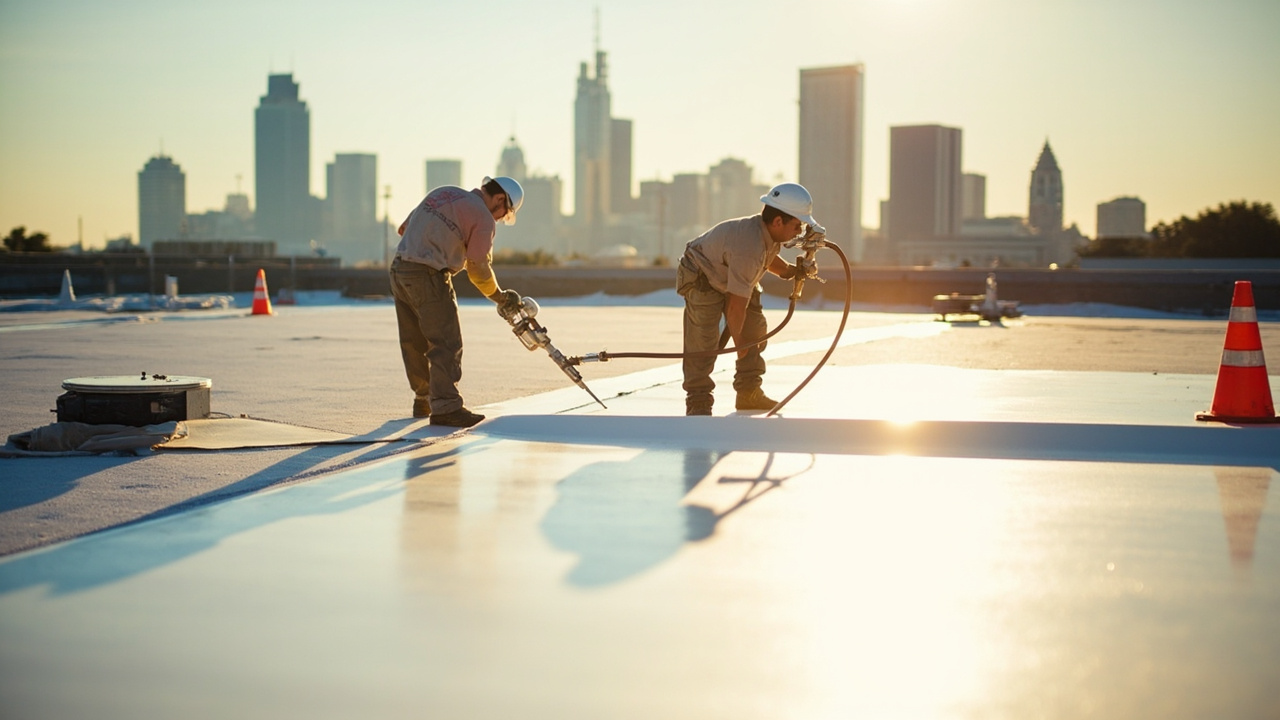
After foam curing, we apply an elastomeric coating system. This topcoat provides UV protection, enhances weather resistance, and reflects solar radiation. The coating selection depends on your building's exposure, roof traffic requirements, and aesthetic preferences. Silicone coatings offer superior ponding water resistance, while acrylic coatings provide better dirt pickup resistance and recoatability.

The key advantage is the monolithic installation. Unlike torch-down roofing or TPO membranes that require overlapping seams, commercial spray foam roofing creates a continuous barrier from parapet to parapet. This eliminates the thermal bridging that occurs at seams and fasteners, improving the effective R-value across the entire roof surface. For facilities with rooftop equipment, HVAC curbs, or complex geometries, the SPF roof system conforms to these penetrations without additional flashing details that complicate installation and maintenance.

What Happens During Your Commercial SPF Installation

Spray Foam Roofing in Oklahoma City – Reduce Energy Costs and Protect Business Continuity
01

Site Assessment and Specification

We conduct a comprehensive roof survey to document existing conditions, measure moisture content in the substrate, and identify structural issues requiring repair before foam application. Core samples determine if the existing roof system can support additional weight. We then calculate the required foam thickness based on your target R-value and develop a specification that meets Oklahoma City building codes and FM Global wind uplift requirements for your building's height and exposure category.
02

Substrate Preparation and Application

Our crews remove incompatible materials, repair damaged decking, and pressure wash the substrate. We verify surface temperature and ambient conditions fall within the manufacturer's application window, typically between 40 and 100 degrees. Spray polyurethane foam roofing is applied in uniform passes, with each layer curing before the next. We maintain consistent density and thickness across the roof area, paying special attention to transitions, penetrations, and drainage pathways. Quality control includes pull tests to verify adhesion strength.
03

Coating and Final Inspection

After foam cures, we apply the specified coating system at the manufacturer-required mil thickness. This typically involves a base coat followed by a topcoat, with embedded granules for enhanced UV protection if specified. We inspect the completed installation for uniform coverage, proper drainage, and compliance with the warranty requirements. You receive documentation including material certifications, thickness measurements, and photographs. The roof is ready for service immediately after final cure, with no extended downtime affecting your operations.

Why Oklahoma City Commercial Property Owners Choose Local SPF Expertise

Commercial roofing in Oklahoma City requires understanding the specific demands of our climate zone and building stock. Many commercial structures here were built between 1970 and 1990, featuring metal deck construction or lightweight concrete over metal deck. These substrates require specialized preparation techniques and primer selection to achieve proper foam adhesion. A crew unfamiliar with Oklahoma City construction methods will miss critical details that lead to warranty voids and premature failure.

Local building codes in Oklahoma City reference the International Building Code with amendments specific to wind loads and energy efficiency. Commercial spray foam roofing must meet minimum R-value requirements that vary by building type and square footage. We design SPF roof systems that satisfy these requirements while optimizing your investment. This includes calculating thermal drift, understanding how polyurethane foam roofing ages, and selecting coating systems that maintain performance through Oklahoma's temperature extremes.

Our crews work year-round in Oklahoma City conditions. We know the seasonal weather patterns that create application windows, the morning dew points that delay start times, and the afternoon thunderstorm cycles that require flexible scheduling. This local knowledge prevents costly weather-related installation failures that occur when out-of-state contractors misjudge Oklahoma's volatile climate.

We maintain relationships with local building inspectors and code officials, expediting permit approvals and inspections. For properties in historic districts or special zoning areas, we navigate the additional approval requirements that delay projects when handled by unfamiliar contractors. Your project moves forward efficiently because we understand both the technical requirements of SPF roofing and the administrative processes specific to Oklahoma City.

What Your Business Can Expect From an SPF Roof System

Project Timeline and Business Impact

Most commercial spray foam roofing projects in Oklahoma City complete within 5 to 15 business days, depending on roof area and complexity. We schedule work to minimize disruption, coordinating with your operations team to avoid peak business hours or critical production periods. The application process generates minimal noise and no open flames, unlike torch-applied systems. Your facility remains operational throughout installation. Weather delays are possible given Oklahoma City's unpredictable conditions, but spray polyurethane foam roofing can be applied in cooler temperatures than many membrane systems, extending the working season. We provide daily progress updates and adjust crew sizing to meet your deadline requirements.

Pre-Installation Evaluation Process

The evaluation begins with a roof inspection that documents current conditions through photographs, moisture scans, and core samples. We identify structural issues, measure existing insulation values, and assess drainage performance. You receive a detailed report outlining necessary repairs, recommended foam thickness, coating options, and projected energy savings. This assessment includes thermal imaging to locate wet insulation and hidden leaks that compromise roof performance. We provide multiple specification options with different warranty terms, allowing you to balance upfront investment against long-term value. The evaluation typically takes 2 to 4 hours for most commercial buildings in Oklahoma City.

Performance and Longevity

A properly installed SPF roof system delivers 20 to 30 years of service life with routine maintenance. The seamless membrane eliminates leak-prone seams and fasteners, reducing emergency repair frequency. You will see immediate reductions in cooling costs, typically 15 to 30 percent depending on the existing roof insulation levels. The closed-cell foam structure resists moisture absorption, maintaining R-value over time unlike fiberglass or mineral wool insulation that degrades when wet. Wind uplift resistance meets or exceeds code requirements for Oklahoma City, protecting your investment during severe weather. The reflective coating reduces roof surface temperature by 50 to 80 degrees, extending the life of underlying materials.

Maintenance and Warranty Coverage

Commercial spray foam roofing requires annual inspections and periodic recoating to maintain warranty coverage. We offer maintenance programs that include spring and fall inspections, coating touch-ups, and documentation for warranty compliance. The elastomeric coating typically requires renewal every 10 to 15 years, depending on environmental exposure and roof traffic. This recoating process is significantly less expensive than full roof replacement and extends system life indefinitely. Warranty options range from material-only coverage to full system warranties covering both materials and labor. We coordinate warranty registration with manufacturers and maintain service records required for warranty claims throughout the life of your SPF roofing.

Frequently Asked Questions

You Have Questions,
We Have Answers

Is spray foam good for roofs? +

Yes. Spray foam provides excellent commercial roofing performance in Oklahoma City. The system creates a seamless, monolithic membrane that eliminates leak points common in traditional roofing. It adheres directly to substrate, expanding to fill gaps and cracks. For flat or low-slope commercial buildings, spray foam offers superior waterproofing and energy efficiency. The material withstands Oklahoma's temperature extremes, hail storms, and UV exposure when properly maintained. Commercial facilities benefit from reduced HVAC costs due to high R-value insulation properties. The lightweight application adds minimal structural load, making it suitable for retrofit projects on older buildings throughout the metro area.

What are the disadvantages of a spray foam roof? +

Spray foam roofing requires skilled installation to perform correctly. Improper application leads to thickness inconsistencies, adhesion failures, and premature degradation. The system needs recoating every 10-15 years to maintain UV protection and waterproofing integrity. Oklahoma City's intense summer sun accelerates surface degradation without proper maintenance. Installation depends on specific weather conditions. You cannot apply spray foam during rain, high humidity, or temperature extremes. Commercial buildings with significant ponding water need drainage solutions first, as standing water degrades the coating. The initial cost runs higher than some conventional systems, impacting project budgets and ROI timelines for commercial property owners.

How long does a spray foam roof last? +

A properly installed and maintained spray foam roof lasts 20-30 years on commercial buildings in Oklahoma City. Lifespan depends on initial installation quality, coating maintenance, and exposure conditions. You must recoat the surface every 10-15 years to protect the foam substrate from UV damage. Oklahoma's climate, including hail storms and temperature fluctuations, impacts longevity. Commercial facilities with routine maintenance programs see extended performance. Neglected systems fail prematurely due to coating breakdown and water infiltration. The seamless membrane eliminates common failure points found in seamed roofing systems. With proper care, spray foam roofs outlast many traditional commercial roofing materials while maintaining energy efficiency throughout their service life.

Is spray foam roofing expensive? +

Yes, spray foam roofing costs more upfront than conventional commercial systems. Expect to pay premium pricing for material and specialized labor in Oklahoma City. The expense reflects technical installation requirements, equipment costs, and skilled applicator expertise. Commercial projects run higher due to thickness requirements, surface preparation, and coating specifications. However, you recover costs through energy savings, reduced HVAC demand, and extended service life. The seamless application eliminates tear-off expenses on retrofit projects. Factor in long-term ROI when evaluating commercial roofing investments. Lower maintenance costs and improved building envelope performance offset initial expenditure. Request detailed proposals comparing lifecycle costs rather than focusing solely on installation price.

Why are insurance companies not insuring homes with spray foam insulation? +

Insurance companies scrutinize spray foam insulation in residential attics due to improper installation risks, not commercial roofing applications. The concern centers on closed-cell foam applied incorrectly in home attics, which can trap moisture, hide structural issues, or create fire hazards. This confusion does not apply to commercial spray foam roofing systems. Commercial roof applications follow different installation protocols, building codes, and inspection standards. Oklahoma City commercial properties with professionally installed spray foam roofing maintain normal insurability. The issue stems from unqualified residential contractors applying attic insulation without proper ventilation or building science knowledge. Commercial roofing contractors follow strict specifications that meet insurance and fire code requirements.

How much does it cost to spray foam a 2000 foot attic? +

This question addresses attic insulation, not commercial roofing applications. Commercial spray foam roofing costs differ from residential attic insulation projects. Attic insulation pricing varies based on depth, access difficulty, and preparation requirements. Most commercial roofing projects involve flat or low-slope roof membranes, not attic spaces. For commercial facilities in Oklahoma City needing roof insulation and waterproofing, spray foam provides integrated solutions. Commercial applications require thicker foam layers, protective coatings, and adherence to commercial building codes. Focus on your commercial building's roof area, current condition, and performance requirements. Request proposals specific to commercial roofing rather than residential attic insulation to ensure accurate project scoping and budget allocation.

Why are people removing spray foam? +

Property owners remove spray foam due to improper installation, not material failure. Poor application technique creates adhesion problems, thickness inconsistencies, or trapped moisture. Some remove residential attic foam installed without proper building science knowledge. In commercial settings, removal occurs when building owners misunderstand maintenance requirements. Oklahoma City buildings sometimes need foam removal before roof replacement if the existing system suffered neglect or damage. Incorrect product selection for climate conditions leads to premature failure. Commercial facilities may remove foam when changing building use or updating systems. Proper installation and maintenance eliminate most removal scenarios. Quality commercial applications remain in service for decades without requiring removal or replacement.

Why is it hard to sell a house with spray foam insulation? +

This concern applies to residential attic insulation, not commercial spray foam roofing. Home buyers and appraisers worry about improperly installed attic foam that hides structural defects or creates moisture problems. Commercial property transactions do not face this stigma. Commercial buyers evaluate roofing systems based on performance, remaining service life, and maintenance records. Oklahoma City commercial properties with documented spray foam roofing installations maintain market value. Professional surveys and roof inspections verify system condition during property transfers. The commercial real estate market recognizes spray foam roofing as a legitimate, high-performance system. Focus on maintenance documentation and professional installation records to support property valuations and transaction processes.

Why are lenders rejecting homes with spray foam insulation? +

Lenders reject residential properties with questionable attic insulation installations, not commercial buildings with spray foam roofing. The lending concern stems from unqualified contractors applying foam in home attics without following building codes or proper ventilation protocols. This creates appraisal issues and mortgage qualification problems for residential buyers. Commercial lending does not carry this restriction. Oklahoma City commercial properties with professional spray foam roofing systems qualify for standard commercial financing. Lenders evaluate commercial roofs based on condition reports, remaining useful life, and maintenance history. The commercial lending market recognizes spray foam as an acceptable roofing system. Ensure your commercial property maintains proper documentation and inspection records to support financing processes.

How much does it cost to replace a roof on a 2200 square foot house? +

This question addresses residential shingle replacement, not commercial spray foam roofing. Commercial roofing costs differ from residential projects due to building codes, material specifications, and performance requirements. Commercial buildings in Oklahoma City with flat or low-slope roofs need different solutions than residential pitched roofs. Spray foam roofing costs depend on existing substrate condition, required thickness, coating specifications, and building size. Commercial projects factor in business interruption costs, warranty requirements, and lifecycle value. For accurate commercial roofing budgets, request proposals based on your specific building type, current roof condition, and performance objectives rather than residential square footage comparisons. Focus on ROI and operational continuity.

How Oklahoma City's Temperature Swings Impact Commercial Roof Selection

Oklahoma City experiences temperature fluctuations exceeding 50 degrees within 24 hours during spring and fall transitions. These rapid thermal cycles cause expansion and contraction in conventional roofing materials, stressing seams and fasteners until they fail. Built-up roofing develops cracks in the asphalt layers. TPO and EPDM membranes shrink, pulling away from termination bars and parapet walls. Metal roofing panels buckle at the fastener lines. The polyurethane foam roofing system accommodates this movement through its flexible cellular structure and bonded installation. Rather than fighting thermal expansion with mechanical attachments, SPF roofing moves with the substrate, maintaining waterproof integrity through Oklahoma City's extreme weather cycles.

Commercial property managers in Oklahoma City deal with multiple roofing contractors who lack experience with spray foam systems. This creates hesitation when considering SPF roofing despite its performance advantages. We work directly with facility maintenance teams, providing technical training on proper roof care and connecting them with manufacturer representatives for specification questions. Our relationships with local engineering firms and architectural practices ensure your SPF roof system integrates correctly with building automation systems, daylighting strategies, and sustainability goals. This collaborative approach reduces risk and provides the local support network necessary for long-term asset management.
Roofing Services in The Oklahoma City Area

Our dedicated team is proud to serve homeowners and businesses across the entire Oklahoma City metropolitan area and its surrounding communities. We're committed to bringing our expert roofing services directly to you, no matter where you are in our service radius. We encourage you to contact us to discuss your project, and we will be on our way to assist you with your roofing needs.

Address:
United Roofing Oklahoma City, 5600 N May Ave, Oklahoma City, OK, 73112

Additional Services We Offer

Our news updates

Latest Articles & News from The Blogs

Common Ways New Homeowners Accidentally Void Their Roofing Warranty Your new roof represents a significant investment and the warranty that…

Common Ways New Homeowners Accidentally Void Their Roofing Warranty

Common Ways New Homeowners Accidentally Void Their Roofing Warranty Your new roof represents a significant investment and the warranty that…

How Much Noise Does a Metal Roof Really Make During an Oklahoma Rainstorm?

Is a Metal Roof Too Noisy During Oklahoma Storms? Oklahoma City homeowners considering metal roofing often worry about rain noise.…

Why Your Neighbors Are Choosing Class 4 Shingles Even if They Don't Have Hail Damage

Why Your Neighbors Are Choosing Class 4 Shingles Even if They Don’t Have Hail Damage Oklahoma City homeowners are making…

Contact Us

Protect your facility and reduce operating costs with a commercial spray foam roofing system engineered for Oklahoma City conditions. Call (405) 507-3933 to arrange a site assessment and receive a detailed specification with projected energy savings for your building.