menu

Apartment Complex Roofing in Oklahoma City – Minimize Downtime and Protect Your Investment

Commercial apartment building roofing solutions engineered for Oklahoma City's severe weather patterns, with fast-track scheduling that keeps your units occupied and rental income flowing while we protect your property.

Slider Image 1
Slider Image 2
Slider Image 3
Slider Image 4
Slider Image 5
Slider Image 7
Slider Image 8
Slider Image 9
Slider Image 10
Slider Image 11

Why Oklahoma City Apartment Buildings Face Unique Roofing Challenges

Oklahoma City multifamily properties take a beating from conditions that accelerate roof degradation. Your apartment complex endures hailstorms that punch through shingles, straight-line winds exceeding 60 mph that lift membrane edges, and temperature swings from 15 degrees in January to 100 degrees in July that cause expansion and contraction cycles. These cycles crack sealants and create water entry points.

Clay soil throughout the Oklahoma City metro shifts during wet-dry cycles, causing foundation movement that transfers stress to your roof structure. You will see this manifest as ponding water on flat sections, separated flashing around HVAC units, and stress cracks at expansion joints. The problem compounds on multi-unit roofing systems because water from one compromised area travels horizontally, damaging multiple units before you notice interior signs.

Commercial apartment roofing failures create liability exposure you cannot ignore. Water intrusion triggers mold growth within 48 hours, tenant complaints escalate to habitability claims, and delayed repairs multiply your restoration costs. Oklahoma City's wind-driven rain pushes water under worn membrane seams and through deteriorated pipe boots, creating interior damage that forces unit vacancies.

Your multi-family housing roofing system requires proactive management because reactive repairs cost three times more than scheduled maintenance. When you wait for visible damage, you are already looking at drywall replacement, tenant relocation costs, and lost rental income. The financial impact extends beyond repair bills to include reputation damage when residents post complaints online and prospective tenants see maintenance issues during tours.

Why Oklahoma City Apartment Buildings Face Unique Roofing Challenges
How We Approach Multifamily Roofing Projects Differently

How We Approach Multifamily Roofing Projects Differently

Our commercial apartment roofing methodology starts with infrared moisture scanning that maps hidden water intrusion before it becomes visible damage. This technology identifies saturated insulation and trapped moisture in the roof assembly, preventing future deck rot and premature system failure. You get a documented condition assessment that quantifies remaining service life and prioritizes repair zones by urgency.

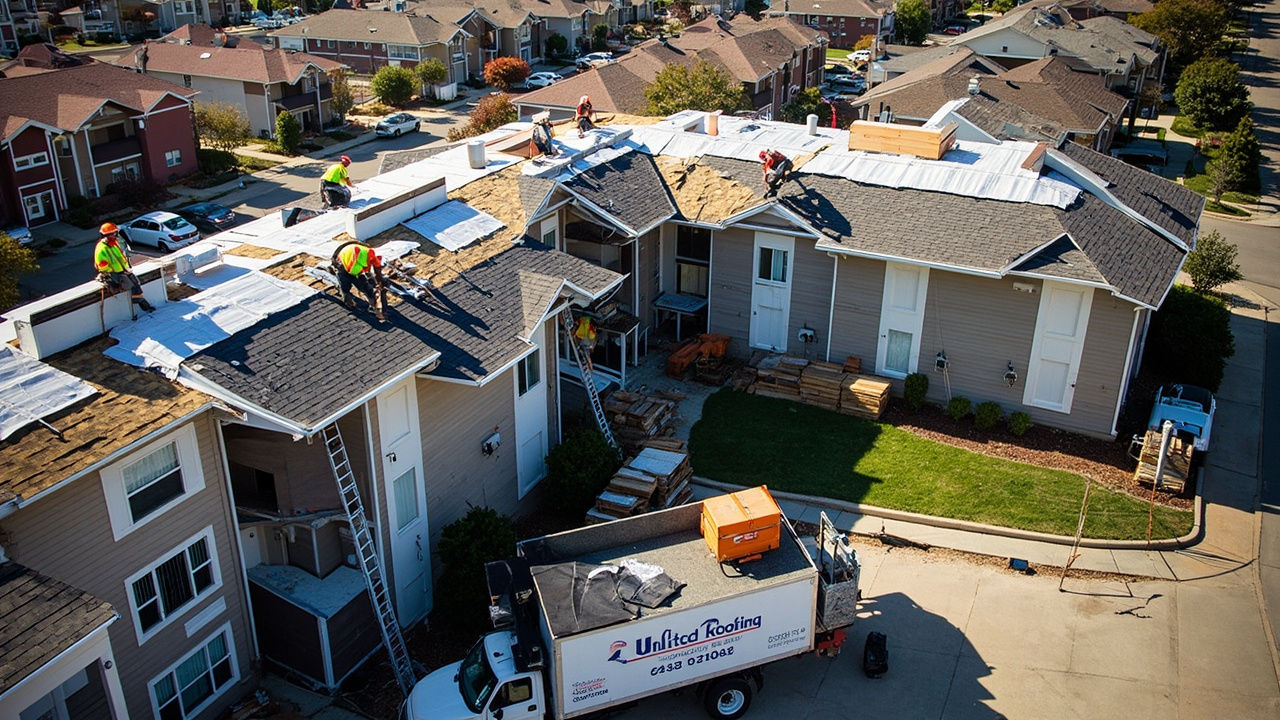
We schedule work in phases that minimize tenant disruption and maintain occupancy rates. Most apartment building roofing projects run during weekday business hours when residents are at work, with material deliveries staged to avoid blocking parking areas. Our crews section off work zones to keep noise contained and maintain safe access to all units. You will not lose rental income to construction interference.

For multi-unit roofing services, we deploy commercial-grade materials engineered for Oklahoma City's climate zone. TPO membranes with heat-welded seams create watertight barriers that withstand ponding water and UV exposure. Modified bitumen systems with granulated cap sheets resist hail impact and provide Class A fire ratings required by local code. We install tapered insulation systems that eliminate standing water and reduce your HVAC load by improving R-values across the entire roof plane.

Our approach includes coordination with your property management schedule. We provide 48-hour notice to residents, post work zone signage, and maintain daily communication about project progress. You receive photo documentation at each phase, so your ownership group stays informed without site visits. We handle inspections, permit compliance, and final documentation that protects your liability exposure and satisfies your insurance carrier requirements.

What Happens During Your Apartment Roofing Project

Apartment Complex Roofing in Oklahoma City – Minimize Downtime and Protect Your Investment
01

Building Assessment and Scope

We conduct a complete roof inspection using moisture meters and core samples to determine substrate conditions. You receive a detailed scope document that separates immediate repairs from long-term capital planning items. This assessment includes structural load capacity evaluation, drainage analysis, and code compliance review. We identify insurance claim opportunities when storm damage exists and provide documentation your adjuster needs to process commercial property claims under your policy terms.
02

Phased Installation Scheduling

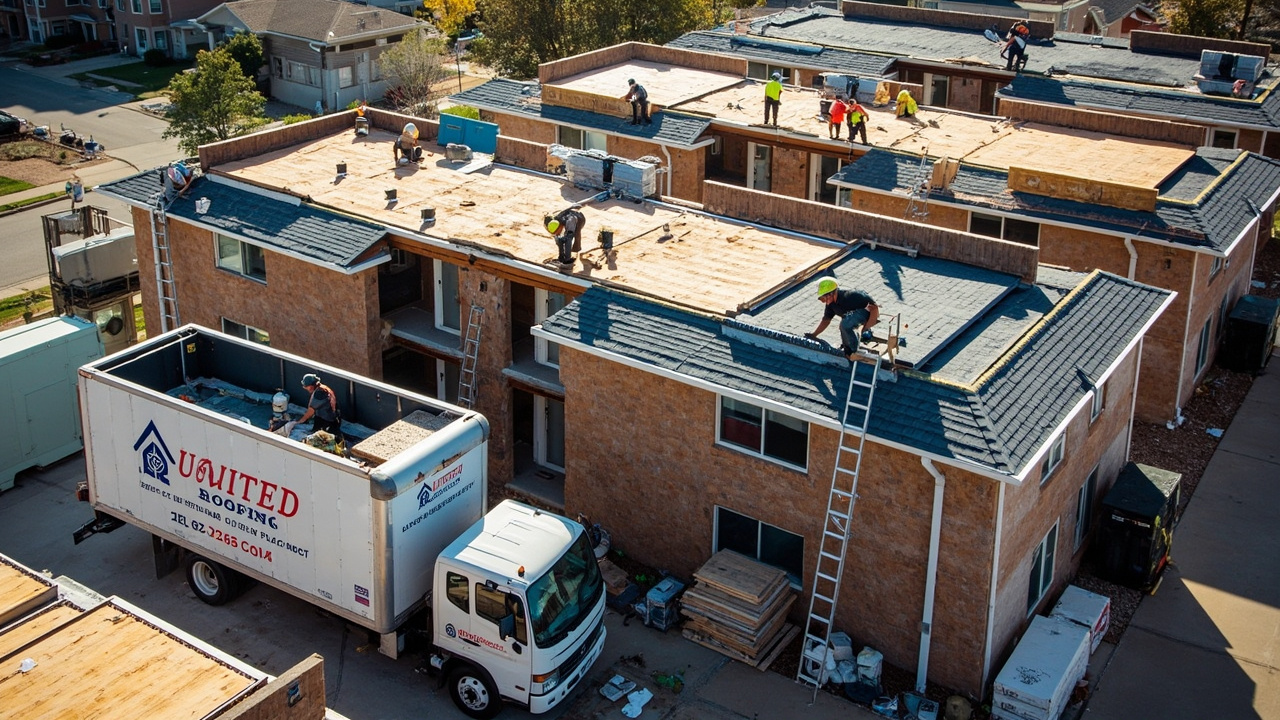
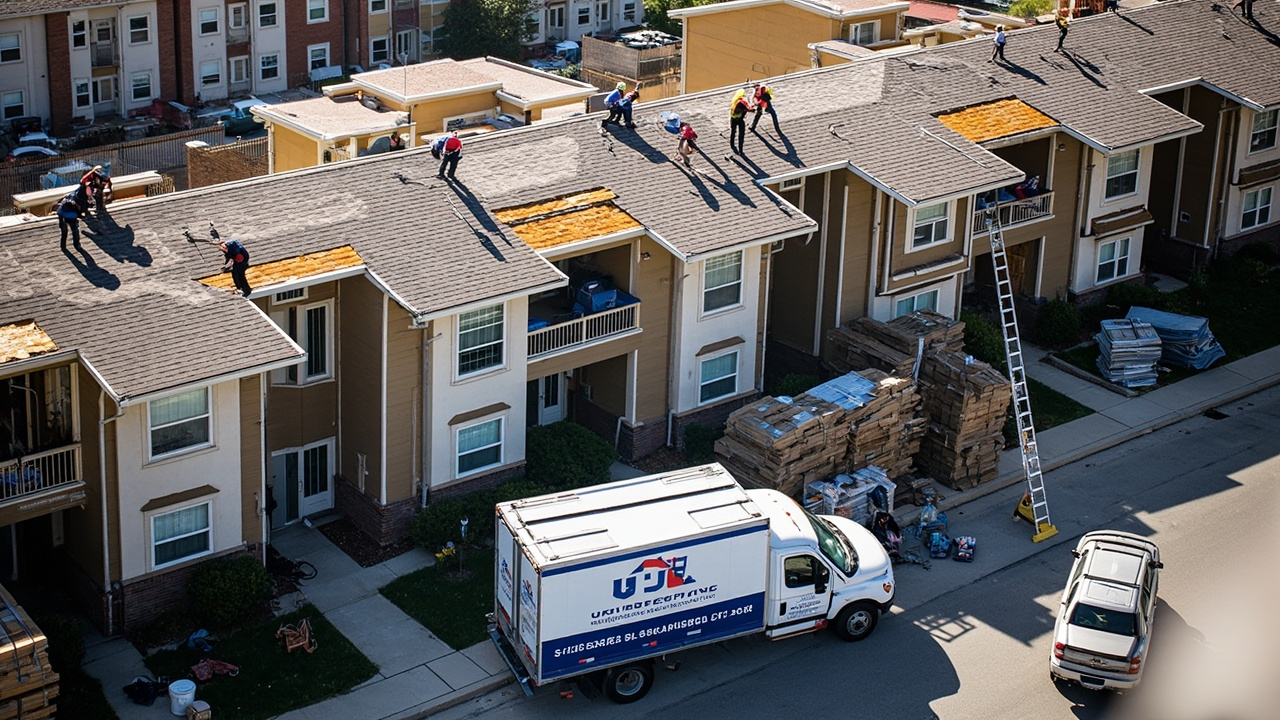
We break large apartment complex roofing projects into manageable sections that limit disruption to specific buildings at a time. Each phase includes tear-off, substrate repair, new membrane installation, and flashing details completed before moving to the next section. You maintain normal property operations while we systematically replace your roof system. Our project manager coordinates with your maintenance staff daily to address resident concerns and adjust scheduling around property events or lease-up periods.
03

Final Inspection and Documentation

After installation, we conduct a final walkthrough with your property manager to verify completion standards. You receive as-built drawings showing all penetration locations, drainage routing, and membrane thickness specifications. We provide material certifications, manufacturer warranty registration, and maintenance protocols specific to your roof system. This documentation package satisfies lender requirements, protects your asset value, and establishes the baseline for your preventive maintenance program going forward.

Why Property Managers Trust Our Oklahoma City Team

First Choice Roofing Atlanta brings commercial roofing expertise to Oklahoma City multifamily properties with crews trained in large-scale project management. We understand that your priority is maintaining occupancy and cash flow, not just fixing roofs. Our estimators account for phasing requirements, tenant notification protocols, and work-hour restrictions that other contractors overlook until problems arise mid-project.

We know Oklahoma City's International Building Code amendments and commercial property requirements because we work with local building departments daily. Your project will pass inspection the first time because we detail flashing assemblies, fire barrier transitions, and parapet caps to current code standards. We carry commercial general liability coverage that satisfies property management company requirements and provide certificates of insurance directly to your corporate office.

Our familiarity with Oklahoma City's architectural styles means we source materials that match existing buildings when you are replacing sections rather than complete roof systems. We stock TPO colors that blend with adjacent buildings and can match modified bitumen cap sheet granules to maintain uniform appearance across your property portfolio. This attention to aesthetic consistency matters when you are marketing units and need curb appeal that justifies your rental rates.

You get a single point of contact who manages every aspect of your multifamily roofing project from permit application through final inspection. No subcontractor coordination falls on your staff. We handle material procurement, job site safety compliance, and waste disposal. Our project timeline includes buffer days for weather delays, so your completion date remains reliable even when Oklahoma City's spring storms interrupt work schedules. You can commit to resident notifications and plan your next capital project with confidence in our delivery date.

What Your Apartment Roofing Project Includes

Project Timeline and Scheduling

Most apartment building roofing projects in Oklahoma City take four to eight weeks depending on building count and square footage. We provide a detailed schedule during contract signing that breaks down each phase with start and completion dates. Weather delays get communicated immediately with revised timelines. We prioritize buildings with known leak issues first to stop ongoing damage while completing your entire property systematically. Rush scheduling is available for properties with immediate habitability concerns or insurance claim deadlines. You will know exactly when each building starts and finishes before we mobilize equipment.

Initial Property Evaluation

Our commercial assessment takes two to four hours depending on property size and includes roof access to every building, attic inspection where accessible, and interior ceiling review in units with reported leaks. We use thermal imaging to detect moisture intrusion not visible during standard inspection. You receive a written report with photos, moisture map overlay, and repair recommendations ranked by priority. This report includes budget estimates for immediate repairs versus full replacement so you can make informed capital decisions. We identify code violations that create liability exposure and recommend corrections that satisfy local building department requirements.

Finished System Performance

Your completed multifamily roofing system will meet or exceed manufacturer specifications for Oklahoma City's wind zone and weather conditions. Membrane seams get tested during installation to verify watertight integrity before we move to the next section. All penetrations receive proper flashing and sealant details that prevent future water entry. You get a roof system engineered for 20-plus year service life with properly installed drainage that eliminates ponding water. Energy efficiency improves through upgraded insulation R-values that reduce HVAC runtime and lower utility costs. The finished installation passes building department inspection and qualifies for manufacturer warranty registration.

Warranty Coverage and Maintenance

Material warranties transfer with property ownership and remain valid through regular maintenance. We provide a detailed maintenance checklist specific to your roof system that covers drain cleaning frequency, membrane inspection points, and sealant refresh intervals. Annual inspections catch small issues before they become water intrusion problems, extending your roof service life and protecting your warranty coverage. We offer maintenance contracts that include bi-annual inspections, priority storm response, and documentation that satisfies insurance carrier requirements. Your property management team receives our emergency contact information for after-hours storm damage assessment.

Frequently Asked Questions

You Have Questions,
We Have Answers

What type of roof do apartment buildings have? +

Apartment buildings in Oklahoma City use low-slope or flat roofing systems. The most common types are TPO, EPDM, modified bitumen, and built-up roofing. These systems handle water drainage differently than pitched residential roofs. TPO dominates newer construction due to reflectivity and energy efficiency. Modified bitumen works well for Oklahoma City's temperature swings and hail exposure. Built-up roofing remains on older complexes but requires more maintenance. The choice depends on building age, budget, and whether energy codes apply. Multi-family properties need commercial-grade materials that withstand foot traffic from HVAC maintenance and minimize tenant disruption during installation.

How much should a 2000 sq ft roof cost? +

Commercial roofing pricing differs from residential calculations. A 2000 square foot section on an apartment complex costs more per square foot than single-family work due to accessibility, substrate preparation, and code requirements. Material choice drives the range. TPO runs mid-range, EPDM slightly less, and modified bitumen sits higher. Oklahoma City projects factor in wind uplift ratings for our storm exposure and potential hail damage history. Substrate condition, parapet walls, and existing drainage issues add cost. Property managers should budget for engineering assessments and multi-phase installations that prevent full building shutdowns. Request per-square-foot breakdowns and compare apples to apples on warranties.

How often do apartment roofs need to be replaced? +

Apartment roofs in Oklahoma City need replacement every 15 to 30 years depending on material and maintenance. TPO and EPDM membranes last 20 to 25 years with proper care. Modified bitumen reaches 20 years. Built-up roofing spans 15 to 20 years but demands more frequent repairs. Oklahoma City's hail storms, UV exposure, and temperature extremes accelerate wear. Deferred maintenance shortens lifespan dramatically. Property managers who schedule biannual inspections and address ponding water or membrane shrinkage extend roof life and avoid emergency replacements. Track installation dates and warranty terms. Budget for replacement before tenant complaints or interior damage force reactive spending.

How to tell if a roofer is lying? +

Spot dishonest contractors by checking references on similar apartment projects and verifying commercial liability coverage specific to multi-family work. Roofers who avoid written estimates, pressure immediate decisions, or refuse building owner contact raise red flags. In Oklahoma City, legitimate contractors pull permits and understand local wind load requirements. Ask for manufacturer certifications and previous complex addresses you can verify. Dishonest roofers downplay substrate damage to lowball bids, then change order you into bankruptcy. They skip proper flashing details around HVAC units. Request detailed scope breakdowns and material specifications. Compare multiple bids line by line. Trust contractors who ask about tenant notification plans and building access logistics.

Which is better, EPDM or TPO? +

TPO outperforms EPDM for most Oklahoma City apartment complexes. TPO reflects heat better, cutting cooling costs in our hot summers. It resists ponding water and installs faster with heat-welded seams that create watertight bonds. EPDM costs less upfront and handles temperature fluctuations well, but seams use adhesive that can fail. For properties prioritizing energy efficiency and long-term performance, TPO wins. EPDM works for budget-conscious owners accepting shorter lifespans. Both handle hail better than shingles. TPO's white surface meets energy codes more easily. Consider building height, tenant density, and whether you plan to hold or sell the property when choosing between them.

What are the three types of roofing? +

The three main commercial roofing categories are single-ply membranes, modified bitumen, and built-up roofing. Single-ply includes TPO and EPDM, which install as large sheets. Modified bitumen uses asphalt-based rolls applied with heat or adhesive, offering puncture resistance. Built-up roofing layers tar and gravel for durability but adds weight. Oklahoma City apartment owners choose based on building structure, budget, and maintenance capacity. Single-ply dominates new construction for speed and performance. Modified bitumen suits properties needing foot traffic durability. Built-up roofing appears on older complexes but requires more upkeep. Each type handles our weather differently. Match the system to your building age and operational goals.

What is the most expensive part of replacing a roof? +

Tear-off and substrate repair cost the most in apartment roofing replacements. Removing old roofing, disposing of materials, and addressing damaged decking consumes labor and time. Oklahoma City complexes with multiple roof levels or limited access increase costs. Substrate issues like rotted wood, failed insulation, or inadequate drainage require fixes before new membrane installation. These hidden problems appear only after tear-off starts. Parapet wall repairs, HVAC curb modifications, and bringing drainage to code add expense. Material costs remain relatively stable, but labor and structural corrections drive budgets up. Property managers should request contingency allowances for substrate unknowns. Skipping proper substrate prep guarantees premature failure and wasted investment.

Will roofing prices go down in 2025? +

Roofing prices will not drop significantly in 2025. Material costs remain elevated due to petroleum-based membrane pricing and supply chain factors. Labor shortages in commercial roofing keep installation costs high across Oklahoma City. Apartment complex projects compete with new construction demand. Insurance claim volume from hail storms sustains contractor schedules, reducing competitive pressure. Prices may stabilize but expect minimal decreases. Property managers should focus on value rather than waiting for price drops. Deferred maintenance costs more than proactive replacement. Secure bids now and lock pricing with contracts. Multi-building owners can negotiate volume discounts. Plan replacements based on roof condition and budget cycles, not market speculation.

How long does it take to replace a 2000 sq ft roof? +

A 2000 square foot section on an apartment complex takes two to five days depending on complexity and weather. Simple tear-off and TPO installation moves quickly. Buildings with multiple penetrations, parapet walls, or drainage modifications take longer. Oklahoma City weather delays are common during spring storm season. Larger apartment projects phase work across weeks to minimize tenant impact and allow crews to work safely. Coordination with property management for access, noise restrictions, and tenant parking affects timeline. Commercial projects require inspections and manufacturer oversight that add time. Contractors balance speed with quality. Rush jobs risk improper adhesion and failed seams. Expect realistic schedules that account for Oklahoma City's unpredictable weather patterns.

How old may a roof be before insurance claims it's too old? +

Insurance companies in Oklahoma City consider roofs over 15 to 20 years old high-risk for coverage limitations. Many carriers restrict claim payouts on roofs exceeding this age, offering depreciated value rather than full replacement cost. Some refuse coverage entirely on roofs older than 20 years. Modified bitumen and TPO roofs receive slightly more flexibility than built-up systems. Carriers assess roof condition through inspections before policy renewal. Property managers should document maintenance records and recent repairs to support coverage. Proactive replacement before the 15-year mark protects insurability and prevents coverage gaps. Older roofs face higher premiums and deductibles. Plan capital improvements around insurance requirements, not just physical condition.

How Oklahoma City's Severe Weather Patterns Impact Apartment Complex Roofing Systems

Oklahoma City sits in the heart of Tornado Alley where apartment buildings face an average of 11 hailstorms per year and wind events that regularly exceed design loads for older roof systems. The combination of spring severe weather and summer heat creates a compression cycle that destroys membrane adhesion and causes granule loss on shingle roofs faster than in temperate climates. Multi-family housing roofing in this metro requires impact-resistant materials and proper attachment methods that withstand 90 mph wind gusts common during May and June storm seasons. Properties near Lake Hefner and along the North Canadian River corridor experience additional moisture exposure that accelerates rust on metal components and promotes algae growth on north-facing roof slopes.

Local property managers recognize that commercial roofing contractors unfamiliar with Oklahoma City's building code amendments create compliance issues during inspection. Our team works with the City of Oklahoma City Development Services Department regularly and understands permit requirements specific to multifamily properties in historic districts like Heritage Hills and Mesta Park where architectural review standards apply. We source materials from local suppliers, which reduces your project timeline and supports the Oklahoma City construction economy. When you choose contractors with established relationships in this market, you avoid the delays and rework that come from out-of-state crews learning local requirements on your project budget.
Roofing Services in The Oklahoma City Area

Our dedicated team is proud to serve homeowners and businesses across the entire Oklahoma City metropolitan area and its surrounding communities. We're committed to bringing our expert roofing services directly to you, no matter where you are in our service radius. We encourage you to contact us to discuss your project, and we will be on our way to assist you with your roofing needs.

Address:
United Roofing Oklahoma City, 5600 N May Ave, Oklahoma City, OK, 73112

Additional Services We Offer

Our news updates

Latest Articles & News from The Blogs

Common Ways New Homeowners Accidentally Void Their Roofing Warranty Your new roof represents a significant investment and the warranty that…

Common Ways New Homeowners Accidentally Void Their Roofing Warranty

Common Ways New Homeowners Accidentally Void Their Roofing Warranty Your new roof represents a significant investment and the warranty that…

How Much Noise Does a Metal Roof Really Make During an Oklahoma Rainstorm?

Is a Metal Roof Too Noisy During Oklahoma Storms? Oklahoma City homeowners considering metal roofing often worry about rain noise.…

Why Your Neighbors Are Choosing Class 4 Shingles Even if They Don't Have Hail Damage

Why Your Neighbors Are Choosing Class 4 Shingles Even if They Don’t Have Hail Damage Oklahoma City homeowners are making…

Contact Us

Call First Choice Roofing Atlanta at (405) 507-3933 for a comprehensive apartment complex roofing assessment. We will evaluate your current system, identify immediate concerns, and provide a detailed proposal that fits your capital budget and timeline requirements.