
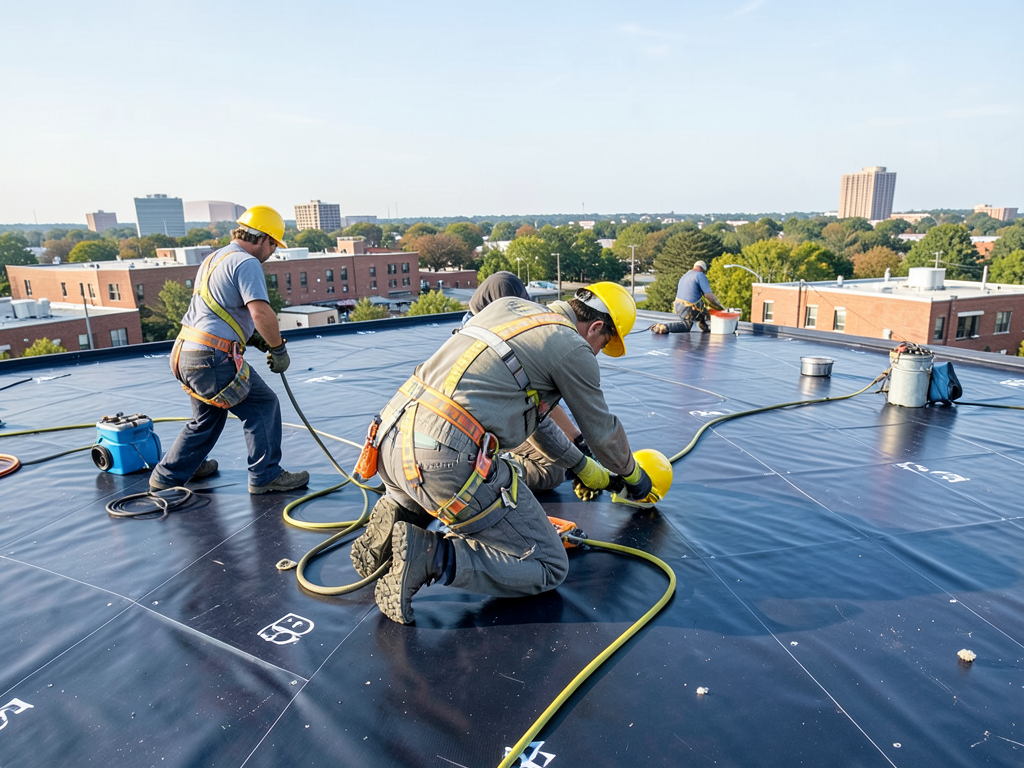
How to Choose the Right Commercial Roofing Contractor in Oklahoma City
Finding the right commercial roofing contractor in Oklahoma City requires more than just comparing prices. Your business depends on a roof that can withstand Oklahoma’s severe weather patterns, from hail storms to high winds. The right contractor brings not only technical expertise but also deep knowledge of local building codes and insurance claim processes specific to the OKC metro area.. Read more about Durable Commercial Flat Roof Solutions for Businesses in Moore.
Commercial properties face unique challenges that residential roofs don’t encounter. Large flat surfaces, complex drainage systems, and the need for minimal business interruption during repairs make commercial roofing a specialized field. Understanding what separates qualified contractors from general roofers can save you thousands in avoided repairs and extended roof life.. Read more about The Best Norman OK Roofers for Emergency Storm Damage Fixes.
Understanding Oklahoma City’s Commercial Roofing Requirements
Oklahoma City’s climate creates specific demands for commercial roofing systems. The region experiences over 50 hailstorms annually, with many producing golf ball-sized hail or larger. The Oklahoma Uniform Building Code Commission requires commercial buildings in certain zones to use Class 4 impact-resistant materials that meet UL 2218 standards. These requirements exist because standard roofing materials often fail after just one severe storm. UL 2218 impact resistance standards.
The city’s building department also mandates specific wind uplift ratings for commercial properties. Most areas require roofs to withstand sustained winds of 90-120 mph, with higher requirements near the North Canadian River corridor where wind tunnels can amplify storm effects. Contractors must understand these requirements to ensure proper permitting and inspection compliance.
Commercial buildings in OKC must also address the area’s extreme temperature swings. Summer temperatures regularly exceed 100°F, while winter brings freezing conditions. This 60-degree temperature differential causes roofing materials to expand and contract, creating stress points that can lead to premature failure. Quality contractors select materials specifically engineered for this thermal cycling.
Key Qualifications to Look For
Commercial roofing requires specialized knowledge that goes beyond residential work. Look for contractors who employ certified roofing technicians through organizations like the National Roofing Contractors Association (NRCA). These certifications demonstrate ongoing education in commercial roofing systems, safety protocols, and code compliance. National Roofing Contractors Association.
Experience with your specific building type matters significantly. A contractor who excels at flat-roof warehouses may struggle with the unique challenges of sloped commercial buildings or buildings with extensive rooftop equipment. Ask for examples of similar projects completed in the past two years within the OKC metro area.
Insurance and bonding requirements for commercial work exceed residential standards. Verify that contractors carry at least $1 million in general liability coverage and workers’ compensation for all employees. Many commercial property owners also require contractors to carry builder’s risk insurance during active projects.
Manufacturer certifications provide another layer of quality assurance. Contractors certified by major commercial roofing manufacturers like GAF, Carlisle, or Firestone have undergone specific training on those systems. These certifications often come with extended warranties that transfer to building owners, providing additional protection for your investment.
Commercial Roofing Systems Available in OKC
Commercial buildings in Oklahoma City typically use one of several roofing systems, each with specific advantages for our climate. Understanding these options helps you evaluate contractor recommendations and make informed decisions about your property.
TPO (Thermoplastic Polyolefin) roofing dominates the OKC market due to its energy efficiency and durability. These white reflective membranes reduce cooling costs during Oklahoma’s hot summers while providing excellent resistance to UV damage. Quality TPO systems installed by certified contractors typically last 20-25 years in our climate.
EPDM (Ethylene Propylene Diene Terpolymer) offers a cost-effective alternative for buildings where energy efficiency matters less than initial cost. This black rubber membrane performs well in our temperature extremes but absorbs more heat than TPO. EPDM typically costs 15-20% less than TPO while lasting 15-20 years with proper maintenance.. Read more about Professional Roof Maintenance Plans for Commercial Buildings in OKC.
PVC roofing provides superior chemical resistance for buildings near industrial areas or those with rooftop equipment that might leak fluids. The heat-welded seams create a monolithic surface that resists ponding water better than other single-ply options. PVC costs more initially but often outlasts TPO in Oklahoma’s harsh conditions.
Modified bitumen systems work well for buildings with small roof areas or those requiring frequent foot traffic. These multi-ply systems provide excellent impact resistance and can be installed with cold adhesives, reducing fire risk during installation. They typically last 15-20 years and cost less than single-ply alternatives.
Metal roofing serves specialized applications where longevity outweighs initial cost. Standing seam metal roofs can last 40-50 years and provide excellent wind resistance. They work particularly well for buildings with high parapets or those in exposed locations where wind uplift is a major concern.
Evaluating Contractor Proposals
Commercial roofing proposals should include detailed specifications that go beyond basic square footage calculations. Quality proposals specify material thicknesses, fastening patterns, and manufacturer model numbers. Vague proposals using terms like “premium materials” without specifics often indicate contractors who cut corners on quality.
Pay attention to warranty terms. Standard manufacturer warranties typically cover material defects for 10-25 years, while workmanship warranties from contractors usually cover 2-5 years. Some contractors offer extended warranties through manufacturer certification programs, which can provide 15-20 year coverage on both materials and workmanship.
Project timelines should account for Oklahoma’s weather patterns. Quality contractors build in weather contingencies, understanding that May through June brings the highest storm frequency. Proposals that promise unrealistic completion dates often result in rushed work or weather-damaged materials.
Safety protocols matter significantly for commercial projects. Contractors should detail their OSHA compliance, fall protection systems, and site security measures. Commercial buildings often cannot be completely vacated during roofing work, making proper safety planning essential to protect both workers and building occupants.
Permit costs and inspection requirements vary by location within Oklahoma City. Properties in historic districts or near the downtown core may face additional requirements. Quality contractors handle permitting as part of their service, ensuring all work meets current code requirements.
Storm Damage and Insurance Claims
Oklahoma’s severe weather creates frequent opportunities for storm damage, making insurance claim experience crucial for commercial roofing contractors. Quality contractors understand the documentation requirements for insurance claims and can provide detailed damage assessments that support your claim.
Post-storm inspections require specific expertise. Hail damage often appears as small dents in metal components or granule loss on membrane surfaces. Quality contractors use moisture meters and thermal imaging to detect water intrusion that might not be visible from the surface. They can distinguish between cosmetic damage and structural issues that require immediate attention.
Insurance companies often require specific documentation for commercial claims. This includes pre-storm photos, detailed measurements, and written assessments from certified inspectors. Contractors experienced in insurance work maintain relationships with adjusters and understand the documentation standards that lead to claim approval.
Emergency response capabilities matter significantly after major storms. Quality contractors maintain crews on standby during peak storm season and can provide temporary repairs to prevent further damage while permanent repairs are planned. Response times of 24-48 hours after major events can prevent thousands in secondary water damage.
Building owners should understand their insurance deductibles and coverage limits before selecting contractors. Some policies require specific materials or installation methods to maintain coverage. Quality contractors can review your policy and recommend approaches that maximize coverage while meeting your budget constraints.
Maintenance Programs and Long-Term Value
Commercial roofing represents a significant investment that benefits from proactive maintenance. Quality contractors offer maintenance programs that include twice-yearly inspections, debris removal, and minor repairs. These programs typically cost 1-2% of the roof’s value annually but can extend roof life by 5-10 years.
Maintenance inspections should include core sampling to assess moisture levels in insulation, seam integrity testing, and drainage system evaluation. Quality contractors document findings with photos and moisture mapping, creating a baseline for future comparisons. This documentation proves valuable for warranty claims and building assessments.
Energy efficiency improvements often pay for themselves within 3-5 years. Quality contractors can install reflective coatings, improve insulation, or upgrade to more efficient materials. OG&E offers commercial energy efficiency rebates for certain improvements, potentially offsetting 10-30% of upgrade costs.
Roof replacement timing affects both cost and business operations. Planning replacements during off-peak seasons can reduce costs by 10-15% and minimize business disruption. Quality contractors help plan these projects to align with your operational needs and budget cycles.
Building owners should track roof age, maintenance history, and repair costs. Quality contractors provide detailed documentation that helps predict replacement timing and budget requirements. This information proves valuable for long-term facility planning and property valuation.
Red Flags to Avoid
Several warning signs indicate contractors who may not deliver quality commercial roofing work. Extremely low bids often signal plans to use substandard materials or cut corners on safety and code compliance. Quality commercial roofing typically costs $5-15 per square foot, depending on the system selected.
Lack of local references or physical business location raises concerns about contractor stability. Commercial roofing requires significant equipment and material investment, making fly-by-night operations rare but still present. Verify physical addresses and visit contractor offices when possible.
Pressure to make immediate decisions often indicates contractors with limited availability or quality concerns. Quality commercial roofing contractors are typically booked weeks in advance and provide proposals with reasonable decision timelines. Rush tactics often mask quality or availability issues.
Requests for large upfront payments suggest financial instability. Standard commercial roofing contracts typically require 10-30% upfront with progress payments tied to completion milestones. Requests for 50% or more upfront may indicate contractors who struggle with cash flow.
Lack of written contracts or vague scope descriptions create liability for building owners. Quality contracts specify materials, timelines, payment schedules, and warranty terms. They also address liability for damage to property during work and cleanup requirements after project completion.
Making Your Final Decision
Selecting the right commercial roofing contractor requires balancing multiple factors beyond just price. Consider the contractor’s experience with similar buildings, their financial stability, and their reputation within the OKC business community. Quality contractors often cost more initially but provide better value through longer-lasting installations and fewer warranty claims.
Request and verify references from similar commercial projects completed in the past two years. Quality contractors provide references willingly and have satisfied customers who can speak to their reliability, workmanship quality, and problem-solving abilities. Be wary of contractors who cannot provide relevant references.
Evaluate the contractor’s business practices beyond just roofing expertise. Do they maintain professional offices? Do they carry proper insurance? Do they have established relationships with material suppliers? These factors indicate business stability and commitment to long-term customer relationships.
Consider the contractor’s ability to handle unexpected issues. Commercial roofing often reveals surprises once work begins, from structural damage to code compliance issues. Quality contractors have the experience and resources to address these issues efficiently without significantly impacting project timelines or budgets.
Trust your instincts about communication and professionalism. Quality contractors respond promptly to questions, provide detailed answers to technical questions, and maintain professional conduct throughout the bidding and selection process. Poor communication during the sales process often indicates challenges during actual project execution.
Frequently Asked Questions
How long does a commercial roof replacement take in Oklahoma City?
Most commercial roof replacements in OKC take 2-4 weeks, depending on building size and weather conditions. Quality contractors build in weather contingencies for Oklahoma’s storm season, typically completing smaller buildings in 1-2 weeks during favorable weather periods.
What permits are required for commercial roofing in Oklahoma City?
Commercial roofing requires building permits from the Oklahoma City-County Health Department. Additional permits may be needed for buildings in historic districts or those near the downtown core. Quality contractors handle all permitting as part of their service.
How do I know if my commercial roof needs replacement or repair?
Age, leak frequency, and inspection results determine whether repair or replacement makes sense. Quality contractors provide detailed assessments using moisture meters and thermal imaging to identify water intrusion. Roofs over 20 years old or with multiple leak areas often benefit from replacement.
Call (405) 507-3933 today to schedule your commercial roof inspection
Don’t wait until leaks damage your business operations. Call (405) 507-3933 today to schedule a comprehensive commercial roof inspection. Our certified technicians will evaluate your roof’s condition, identify potential issues, and provide detailed recommendations for repair or replacement. With over 15 years serving Oklahoma City businesses, we understand the unique challenges of commercial roofing in our climate and can help you make informed decisions about protecting your investment.
{
“@context”: “https://schema.org”,
“@type”: “BlogPosting”,
“headline”: “How to Choose the Right Commercial Roofing Contractor in Oklahoma City”,
“description”: “Find trusted commercial roofing contractors in OKC. Learn what to look for in experience, materials, and storm damage expertise for your business property.”,
“wordCount”: 2046,
“datePublished”: “2026-02-21T10:35:00.000Z”,
“dateModified”: “2026-02-21T10:35:00.000Z”,
“inLanguage”: “en-US”,
“mainEntityOfPage”: {
“@type”: “WebPage”,
“@id”: “https://unitedroofingoklahomacity.com”
},
“publisher”: {
“@type”: “LocalBusiness”,
“name”: “United Roofing Oklahoma City”,
“url”: “https://unitedroofingoklahomacity.com”
},
“author”: {
“@type”: “Organization”,
“name”: “United Roofing Oklahoma City”,
“url”: “https://unitedroofingoklahomacity.com”
},
“image”: {
“@type”: “ImageObject”,
“url”: “https://unitedroofingoklahomacity.com/wp-content/uploads/2026/03/how-to-choose-the-right-commercial-roofing-contrac-1.png”
}
}
{
“@context”: “https://schema.org”,
“@type”: “RoofingContractor”,
“name”: “United Roofing Oklahoma City”,
“url”: “https://unitedroofingoklahomacity.com”,
“address”: {
“@type”: “PostalAddress”,
“addressLocality”: “Oklahoma City”
},
“areaServed”: {
“@type”: “City”,
“name”: “Oklahoma City”
}
}
{
“@context”: “https://schema.org”,
“@type”: “FAQPage”,
“mainEntity”: [
{
“@type”: “Question”,
“name”: “How long does a commercial roof replacement take in Oklahoma City?”,
“acceptedAnswer”: {
“@type”: “Answer”,
“text”: “Most commercial roof replacements in OKC take 2-4 weeks, depending on building size and weather conditions. Quality contractors build in weather contingencies for Oklahoma’s storm season, typically completing smaller buildings in 1-2 weeks during favorable weather periods.”
}
},
{
“@type”: “Question”,
“name”: “What permits are required for commercial roofing in Oklahoma City?”,
“acceptedAnswer”: {
“@type”: “Answer”,
“text”: “Commercial roofing requires building permits from the Oklahoma City-County Health Department. Additional permits may be needed for buildings in historic districts or those near the downtown core. Quality contractors handle all permitting as part of their service.”
}
},
{
“@type”: “Question”,
“name”: “How do I know if my commercial roof needs replacement or repair?”,
“acceptedAnswer”: {
“@type”: “Answer”,
“text”: “Age, leak frequency, and inspection results determine whether repair or replacement makes sense. Quality contractors provide detailed assessments using moisture meters and thermal imaging to identify water intrusion. Roofs over 20 years old or with multiple leak areas often benefit from replacement.”
}
}
]
}
{
“@context”: “https://schema.org”,
“@type”: “BreadcrumbList”,
“itemListElement”: [
{
“@type”: “ListItem”,
“position”: 1,
“name”: “Home”,
“item”: “https://unitedroofingoklahomacity.com”
},
{
“@type”: “ListItem”,
“position”: 2,
“name”: “Blog”,
“item”: “https://unitedroofingoklahomacity.com/blog”
},
{
“@type”: “ListItem”,
“position”: 3,
“name”: “How to Choose the Right Commercial Roofing Contractor in Oklahoma City”
}
]
}
{
“@context”: “https://schema.org”,
“@type”: “Service”,
“serviceType”: “Roofing”,
“provider”: {
“@type”: “LocalBusiness”,
“name”: “United Roofing Oklahoma City”,
“url”: “https://unitedroofingoklahomacity.com”
},
“areaServed”: {
“@type”: “City”,
“name”: “Oklahoma City”
},
“description”: “Find trusted commercial roofing contractors in OKC. Learn what to look for in experience, materials, and storm damage expertise for your business property.”
}