
TPO vs EPDM — Selecting the Best Flat Roof Membrane for Your Choctaw Commercial Building
Choosing between TPO and EPDM for your Choctaw commercial roof is a critical decision that affects energy costs, durability, and maintenance for the next 20+ years. Both materials dominate the Oklahoma market but serve different needs. TPO offers superior reflectivity and hail resistance ideal for Oklahoma’s intense sun and frequent storms. EPDM provides proven durability and lower upfront costs perfect for budget-conscious projects. This guide breaks down the technical differences, local performance factors, and installation requirements to help you make the right choice for your building’s specific needs. Why Local Nichols Hills Residents Choose Our Luxury Roofing Team.
Understanding Flat Roof Systems in Oklahoma’s Climate
Oklahoma’s extreme weather creates unique challenges for commercial flat roofs. Choctaw experiences 100°F summer heat, severe hail from spring storms, and rapid temperature swings that cause materials to expand and contract. The region averages 3-4 hailstorms annually with stones often exceeding 1.5 inches in diameter. Wind speeds during severe weather events regularly exceed 70 mph. These conditions demand roofing materials with high impact resistance and thermal stability. The Oklahoma Uniform Building Code Commission (OBCC) requires Class 4 impact resistance for commercial buildings in most jurisdictions, making material selection critical for both performance and insurance compliance. Roofing Tulsa.
TPO (Thermoplastic Polyolefin): The Modern Standard
TPO membranes consist of a single-ply thermoplastic polyolefin compound reinforced with polyester scrim. The material comes in 45, 60, or 80 mil thicknesses and is typically white or light gray for maximum solar reflectance. TPO’s heat-welded seams create a monolithic surface that resists water infiltration better than adhesives used in other systems.
Key Advantages of TPO
- Energy efficiency with solar reflectance index (SRI) ratings of 95-110, reducing cooling costs by 15-30%
- Superior hail resistance meeting Class 4 impact standards
- Heat-welded seams eliminate leak points common with adhesives
- Flexible in extreme temperatures without cracking
- Resistance to mold, algae, and dirt accumulation
Limitations to Consider
- Higher material costs than EPDM ($5.50-7.00 per square foot vs $3.50-5.00)
- Requires specialized welding equipment and certified installers
- Less proven long-term track record than EPDM (20+ years vs 40+ years)
- Potential for membrane shrinkage over time
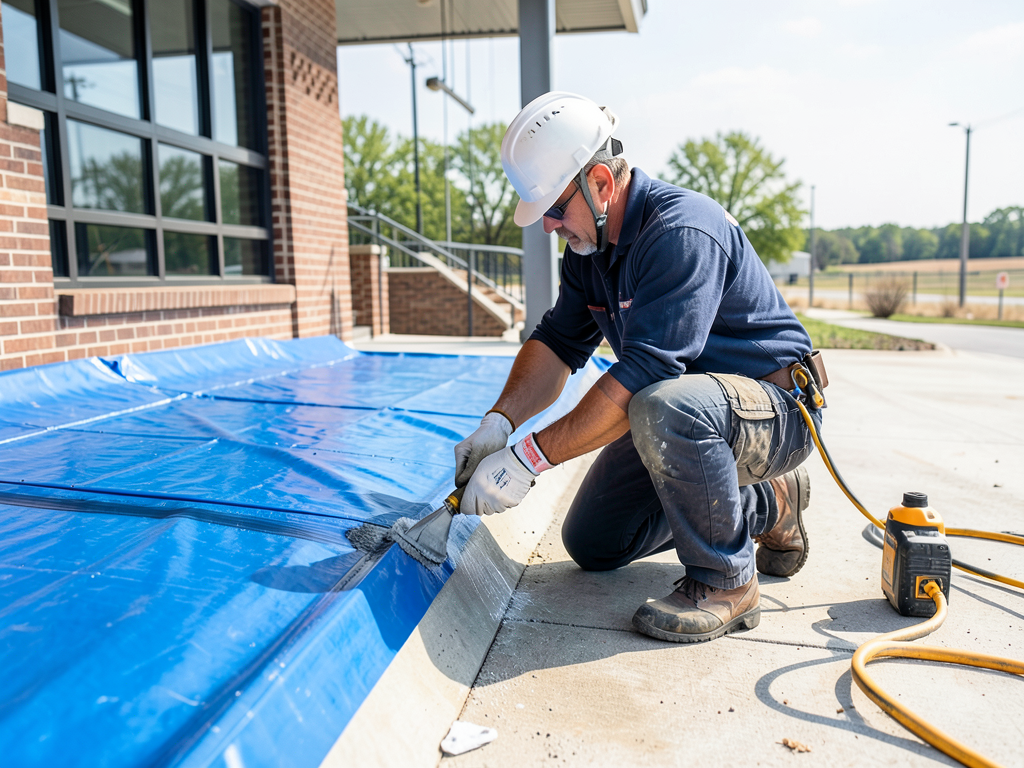
Diagram showing TPO membrane layers including scrim reinforcement, UV stabilizers, and heat-welded seam construction.
EPDM (Ethylene Propylene Diene Monomer): The Durable Rubber Roof
EPDM is a synthetic rubber membrane made from ethylene and propylene derived from oil and natural gas. The material comes in 45, 60, or 90 mil thicknesses and is available in black or white. EPDM has been the commercial roofing standard for over 40 years with proven performance in Oklahoma’s climate. Roofing Norman.
Key Advantages of EPDM
- Lower material and installation costs
- Excellent UV resistance especially in black formulations
- Proven 30-40 year lifespan with proper maintenance
- Simple installation requiring fewer specialized tools
- Superior flexibility in extreme cold without cracking
Limitations to Consider
- Lower solar reflectance (SRI 5-20) increases cooling costs
- Adhesive seams more prone to failure than heat-welded seams
- Less impact resistant than TPO for severe hail
- Can develop surface cracks over time
- Black EPDM absorbs heat, potentially increasing roof deck temperatures
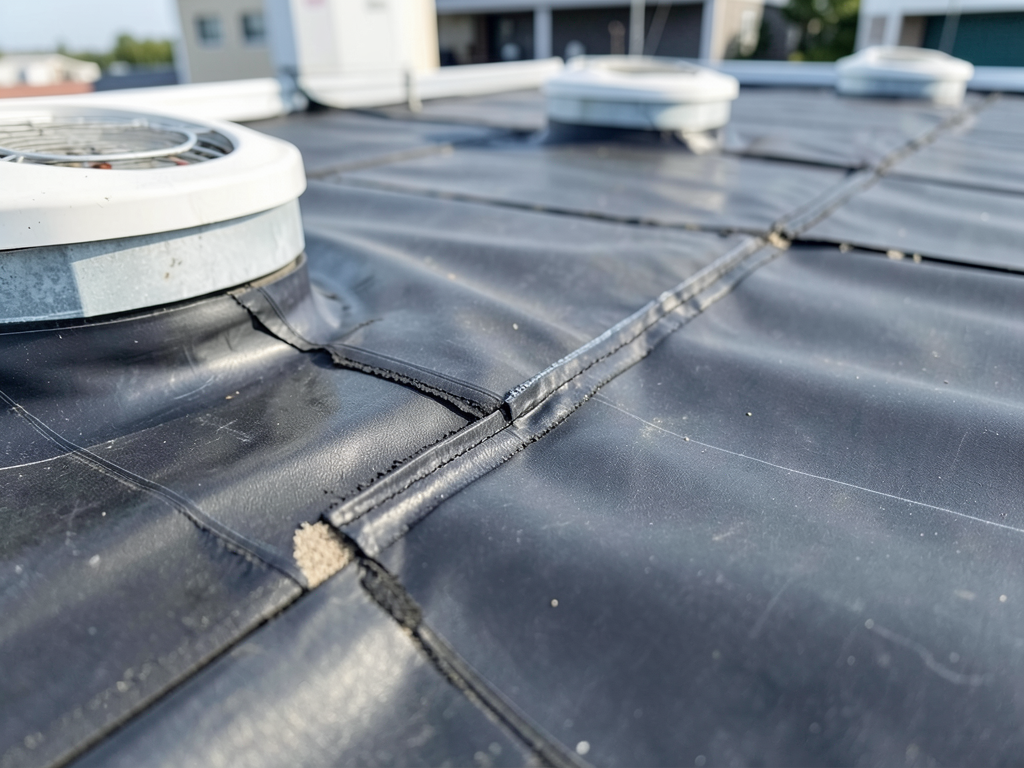
Photo showing EPDM membrane installation with adhesive seams and flashing details around rooftop equipment.
Installation Methods and Local Requirements
Both materials require specific installation techniques that affect performance and warranty coverage. Oklahoma’s building codes mandate specific fastening patterns for wind uplift resistance in Tornado Alley. The OBCC requires 6 nails per shingle equivalent for mechanically attached systems and specific adhesive coverage rates for fully adhered installations.
Installation Methods
- Mechanically Attached: Fasteners through membrane into roof deck every 2 feet
- Fully Adhered: Adhesive applied across entire surface area
- Ballasted: Loose-laid membrane with stone or paver ballast
- Quarterly visual inspections for seam integrity and membrane damage
- Annual professional inspection focusing on heat-welded seams
- Prompt repair of punctures or tears to prevent water infiltration
- Cleaning every 18-24 months to maintain reflectivity
- Semi-annual inspections for adhesive seam separation
- Annual inspection of roof penetrations and flashing details
- Repair of surface cracks before they expand
- Cleaning as needed to prevent debris accumulation
- Retail/Office: TPO for energy efficiency and professional appearance
- Manufacturing/Warehouse: EPDM for lower costs and proven durability
- Healthcare/Food Service: TPO for superior hygiene and easy cleaning
- Historic Buildings: EPDM for minimal visual impact and easier repairs
- Proper substrate preparation and moisture testing
- Correct adhesive selection for local temperature and humidity
- Proper welding temperature and speed for TPO seams
- Appropriate fastening patterns for wind uplift requirements
- Correct flashing details around roof penetrations
Wind uplift ratings determine the appropriate method. Choctaw buildings typically require Class 90-120 uplift resistance. Mechanically attached systems work best for TPO while EPDM performs better fully adhered due to its weight and flexibility.
Cost Comparison and Life Cycle Analysis
Initial material costs tell only part of the story. Energy savings, maintenance requirements, and replacement timing significantly impact total ownership costs over 20-30 years. What You Can Expect to Pay for a Roof Replacement in Edmond.
| Material | Material Cost/SF | Installation Cost/SF | Energy Savings/Year | Expected Lifespan |
|---|---|---|---|---|
| TPO 60 mil | $5.50-7.00 | $2.50-3.50 | $0.25-0.45 | 20-25 years |
| EPDM 60 mil | $3.50-5.00 | $2.00-3.00 | $0.05-0.15 | 25-30 years |
Energy savings calculations assume 10,000 square foot roof with 10% cooling load reduction for TPO. Oklahoma’s average cooling season runs May through September with peak demand in July and August.
Climate Performance in Oklahoma
Oklahoma’s climate creates specific performance requirements that favor different materials based on building use and location.
Hail Resistance
Class 4 impact resistance is critical for Oklahoma commercial buildings. TPO membranes typically achieve Class 4 ratings through thicker material and heat-welded seams that distribute impact forces. EPDM can achieve Class 3 ratings but often requires additional protective layers for Class 4 performance.
UV and Heat Exposure
Choctaw receives 235+ sunny days annually with UV index frequently exceeding 10 in summer months. TPO’s white surface reflects 85-90% of solar radiation while EPDM absorbs 80-95% of heat energy. For buildings with rooftop equipment or occupied spaces below, this difference significantly impacts cooling costs.
Temperature Cycling
Oklahoma experiences temperature swings of 40-50°F within 24 hours during spring and fall. Materials must accommodate expansion and contraction without seam failure. TPO’s heat-welded seams maintain integrity through 200+ degree temperature cycles. EPDM’s adhesive seams may separate over time with repeated cycling.
Maintenance Requirements and Best Practices
Both systems require different maintenance approaches to maximize lifespan and performance. Oklahoma’s severe weather creates unique maintenance needs.
TPO Maintenance Schedule
EPDM Maintenance Schedule
Oklahoma’s spring storms create emergency maintenance needs. Both systems benefit from post-storm inspections to identify hail damage, wind-lifted edges, or debris impact.
Insurance and Building Code Considerations
Oklahoma insurance carriers increasingly require Class 4 impact resistance for commercial property coverage. Some insurers offer premium discounts for roofs meeting specific performance standards.
The OBCC mandates wind uplift ratings based on building height and location. Choctaw commercial buildings typically require Class 90-120 uplift resistance. Both TPO and EPDM can meet these requirements with proper installation methods and fastening patterns.
Energy codes in Oklahoma now require cool roof calculations for buildings exceeding 5,000 square feet. TPO’s superior reflectivity often provides easier compliance with these requirements.
Making the Right Choice for Your Building
Several factors should guide your material selection beyond simple cost comparisons.
Building Use Considerations
Budget Considerations
Initial budget constraints may favor EPDM, but consider total cost of ownership. TPO’s energy savings and longer replacement intervals often offset higher initial costs over 15-20 years.
Timeline Considerations
EPDM installation typically requires 2-3 days for a 10,000 square foot roof. TPO installation takes 3-4 days due to seam welding requirements. Consider business disruption when planning installation timing.
Professional Installation Requirements
Both materials require certified installers familiar with Oklahoma’s specific requirements. The National Roofing Contractors Association (NRCA) recommends verifying manufacturer certification and local experience before selecting an installer. National Roofing Contractors Association.
Key installation factors include:
Photo showing professional roof inspection with moisture meter testing and seam integrity assessment.
Frequently Asked Questions
Which material lasts longer in Oklahoma’s climate?
EPDM typically lasts 25-30 years while TPO lasts 20-25 years. However, TPO’s superior hail resistance often results in fewer repairs during severe weather events, potentially extending effective lifespan.
Are there energy rebates for cool roofs in Oklahoma?
Some Oklahoma utilities offer rebates for cool roof installations meeting specific reflectivity standards. Check with your local utility provider for current programs. TPO’s high reflectivity often qualifies for these incentives.
Can I install either material over my existing roof?
Both materials can be installed over existing single-ply roofs if the substrate is in good condition. However, Oklahoma building codes often require removal of multiple existing layers. A professional inspection determines the best approach for your specific situation.
What happens if hail damages my roof?
Both materials can be repaired after hail damage. TPO’s heat-welded seams allow for easier patching of small punctures. EPDM may require larger patch areas due to adhesive seam limitations. Insurance claims for hail damage require professional inspection to document the extent of damage.
How soon can I walk on the new roof?
TPO can typically be walked on immediately after installation. EPDM requires 24-48 hours for adhesive curing before foot traffic. Both materials achieve full strength within 72 hours under normal Oklahoma weather conditions.
Ready to Choose Your Commercial Roof?
Selecting between TPO and EPDM requires understanding your building’s specific needs, budget constraints, and long-term performance goals. Both materials offer excellent solutions for Choctaw commercial buildings when properly installed and maintained.
The decision ultimately depends on your priorities: TPO for energy efficiency and hail resistance, or EPDM for lower initial costs and proven durability. A professional assessment of your building’s roof deck condition, local weather exposure, and energy usage patterns will help determine the optimal choice.
Don’t leave this critical decision to chance. Call (405) 507-3933 today to schedule a free consultation with our commercial roofing experts. We’ll evaluate your specific needs and provide a detailed recommendation based on Oklahoma’s unique climate conditions and your building’s requirements. Pick up the phone and call (405) 507-3933 before the next storm hits and you’re facing emergency repairs. For more information, visit U.S. Department of Energy cool roof information.
{
“@context”: “https://schema.org”,
“@type”: “BlogPosting”,
“headline”: “TPO vs EPDM — Selecting the Best Flat Roof Membrane for Your Choctaw Commercial Building”,
“description”: “Compare TPO and EPDM flat roof membranes for Choctaw commercial buildings. Learn durability, cost, energy efficiency, and local climate factors to make the best choice.”,
“wordCount”: 1678,
“datePublished”: “2026-03-14T15:19:00.000Z”,
“dateModified”: “2026-03-14T15:19:00.000Z”,
“inLanguage”: “en-US”,
“mainEntityOfPage”: {
“@type”: “WebPage”,
“@id”: “https://unitedroofingoklahomacity.com”
},
“publisher”: {
“@type”: “LocalBusiness”,
“name”: “United Roofing Oklahoma City”,
“url”: “https://unitedroofingoklahomacity.com”
},
“author”: {
“@type”: “Organization”,
“name”: “United Roofing Oklahoma City”,
“url”: “https://unitedroofingoklahomacity.com”
},
“image”: {
“@type”: “ImageObject”,
“url”: “https://unitedroofingoklahomacity.com/wp-content/uploads/2026/03/tpo-vs-epdm-selecting-the-best-flat-roof-membrane-1.png”
}
}
{
“@context”: “https://schema.org”,
“@type”: “RoofingContractor”,
“name”: “United Roofing Oklahoma City”,
“url”: “https://unitedroofingoklahomacity.com”,
“address”: {
“@type”: “PostalAddress”,
“addressLocality”: “Oklahoma City”
},
“areaServed”: {
“@type”: “City”,
“name”: “Oklahoma City”
}
}
{
“@context”: “https://schema.org”,
“@type”: “FAQPage”,
“mainEntity”: [
{
“@type”: “Question”,
“name”: “Which material lasts longer in Oklahoma’s climate?”,
“acceptedAnswer”: {
“@type”: “Answer”,
“text”: “EPDM typically lasts 25-30 years while TPO lasts 20-25 years. However, TPO’s superior hail resistance often results in fewer repairs during severe weather events, potentially extending effective lifespan.”
}
},
{
“@type”: “Question”,
“name”: “Are there energy rebates for cool roofs in Oklahoma?”,
“acceptedAnswer”: {
“@type”: “Answer”,
“text”: “Some Oklahoma utilities offer rebates for cool roof installations meeting specific reflectivity standards. Check with your local utility provider for current programs. TPO’s high reflectivity often qualifies for these incentives.”
}
},
{
“@type”: “Question”,
“name”: “Can I install either material over my existing roof?”,
“acceptedAnswer”: {
“@type”: “Answer”,
“text”: “Both materials can be installed over existing single-ply roofs if the substrate is in good condition. However, Oklahoma building codes often require removal of multiple existing layers. A professional inspection determines the best approach for your specific situation.”
}
},
{
“@type”: “Question”,
“name”: “What happens if hail damages my roof?”,
“acceptedAnswer”: {
“@type”: “Answer”,
“text”: “Both materials can be repaired after hail damage. TPO’s heat-welded seams allow for easier patching of small punctures. EPDM may require larger patch areas due to adhesive seam limitations. Insurance claims for hail damage require professional inspection to document the extent of damage.”
}
},
{
“@type”: “Question”,
“name”: “How soon can I walk on the new roof?”,
“acceptedAnswer”: {
“@type”: “Answer”,
“text”: “TPO can typically be walked on immediately after installation. EPDM requires 24-48 hours for adhesive curing before foot traffic. Both materials achieve full strength within 72 hours under normal Oklahoma weather conditions.”
}
},
{
“@type”: “Question”,
“name”: “Ready to Choose Your Commercial Roof?”,
“acceptedAnswer”: {
“@type”: “Answer”,
“text”: “Selecting between TPO and EPDM requires understanding your building’s specific needs, budget constraints, and long-term performance goals. Both materials offer excellent solutions for Choctaw commercial buildings when properly installed and maintained.”
}
}
]
}
{
“@context”: “https://schema.org”,
“@type”: “BreadcrumbList”,
“itemListElement”: [
{
“@type”: “ListItem”,
“position”: 1,
“name”: “Home”,
“item”: “https://unitedroofingoklahomacity.com”
},
{
“@type”: “ListItem”,
“position”: 2,
“name”: “Blog”,
“item”: “https://unitedroofingoklahomacity.com/blog”
},
{
“@type”: “ListItem”,
“position”: 3,
“name”: “TPO vs EPDM — Selecting the Best Flat Roof Membrane for Your Choctaw Commercial Building”
}
]
}
{
“@context”: “https://schema.org”,
“@type”: “Service”,
“serviceType”: “Roofing”,
“provider”: {
“@type”: “LocalBusiness”,
“name”: “United Roofing Oklahoma City”,
“url”: “https://unitedroofingoklahomacity.com”
},
“areaServed”: {
“@type”: “City”,
“name”: “Oklahoma City”
},
“description”: “Compare TPO and EPDM flat roof membranes for Choctaw commercial buildings. Learn durability, cost, energy efficiency, and local climate factors to make the best choice.”
}