
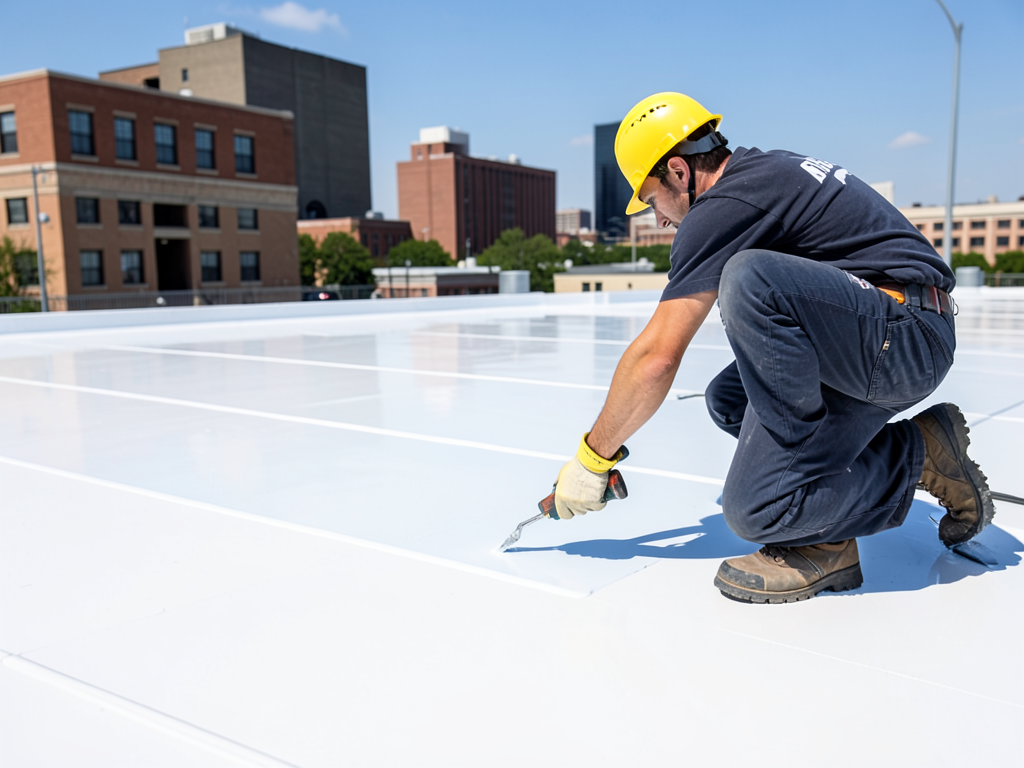
Silicone Versus Acrylic Roof Coatings for Your Commercial Building in Downtown OKC
Choosing between silicone and acrylic roof coatings for your Downtown Oklahoma City commercial building is a critical decision that affects your roof’s longevity, energy efficiency, and resistance to our extreme weather patterns. With Oklahoma City’s combination of intense summer heat, severe hail storms, and sudden temperature swings, the wrong coating can fail within years instead of decades.. Read more about How to Qualify for Energy Tax Credits with a Cool Roof Installation in Oklahoma City.
Commercial building owners in the Bricktown and Central Business District areas face unique challenges. The urban heat island effect raises rooftop temperatures by 10-15 degrees compared to surrounding areas, while the region’s location in Tornado Alley means your roof must withstand both high winds and hail impacts. The right coating system can extend your roof’s life by 10-20 years while reducing cooling costs by 20-30 percent.
Understanding the Chemistry: How Silicone and Acrylic Coatings Work
Silicone coatings use a silicone resin base that creates a flexible, waterproof membrane when cured. The chemistry involves cross-linked polymers that maintain elasticity across temperature ranges from -40°F to 250°F. This flexibility allows silicone to bridge small cracks and accommodate thermal movement without cracking.
Acrylic coatings rely on acrylic polymers suspended in water. As the water evaporates, the polymers form a semi-permeable membrane that allows some moisture vapor transmission while blocking liquid water. Acrylics cure faster than silicone but become more rigid over time, making them susceptible to cracking in extreme temperature cycles.
Performance Comparison: Key Metrics That Matter in Oklahoma
Understanding the technical specifications helps you make an informed decision. Silicone coatings typically achieve 850-900% elongation before breaking, while acrylic coatings reach 250-300% elongation. This difference becomes critical when Oklahoma temperatures swing from 20°F in winter to 100°F in summer.
Ponding water resistance represents another critical factor. Silicone maintains its integrity when submerged for extended periods, making it ideal for flat roofs common in Downtown OKC’s industrial areas. Acrylic coatings break down when continuously exposed to standing water, leading to premature failure on roofs with poor drainage.. Read more about Flat Roof Drainage Solutions for Apartment Managers and Landlords in Midtown.
Weather Resistance: Oklahoma’s Climate Demands Durability
Oklahoma’s climate creates specific challenges that test coating performance. Summer UV exposure in Oklahoma City exceeds 7,000 BTU per square foot annually, requiring coatings with high solar reflectance to prevent heat absorption and degradation.
Hail resistance becomes crucial given Oklahoma’s position in Tornado Alley. Class 4 impact resistance (the highest rating) requires coatings that can flex without cracking when struck by hailstones up to 2 inches in diameter. Silicone’s superior flexibility provides better hail protection than acrylic’s more rigid structure.
Wind resistance follows ASCE 7 wind load standards for Oklahoma City, which require roofing systems to withstand sustained winds of 115 mph with gusts up to 140 mph. Both coatings can meet these requirements when properly applied with appropriate reinforcement at seams and penetrations. Roofing Tulsa.
Application Process: What to Expect During Installation
Professional coating application follows specific steps to ensure proper adhesion and performance. The process begins with power washing to remove dirt, debris, and loose material. This step is critical in Oklahoma’s red clay soil areas where wind-blown dust can prevent proper bonding.
Surface preparation includes repairing damaged areas, sealing penetrations, and reinforcing seams with fabric or mesh. Oklahoma building codes require specific flashing details around HVAC units and roof edges to prevent wind uplift. The application team must work within temperature windows of 50-100°F for optimal curing. EPA Heat Island Effect.
Mil thickness application follows manufacturer specifications. Silicone typically requires 20-30 dry mils for full warranty coverage, while acrylic needs 15-25 dry mils. Oklahoma’s high humidity can extend drying times, requiring careful scheduling to avoid rain damage during the curing process.
Cost Analysis: Initial Investment vs. Long-Term Value
Material costs for silicone coatings range from $0.75 to $1.25 per square foot, while acrylic coatings cost $0.45 to $0.85 per square foot. Labor costs remain similar for both systems, typically $0.50 to $0.75 per square foot in the Oklahoma City market.
Energy savings potential varies by coating color and local utility rates. White silicone coatings achieve Solar Reflectance Index (SRI) values of 105-110, reflecting up to 87% of solar radiation. This translates to cooling cost reductions of 20-30% for buildings with significant roof area exposed to direct sunlight. Why Local Nichols Hills Residents Choose Our Luxury Roofing Team.
Maintenance requirements differ significantly between systems. Silicone requires minimal maintenance beyond occasional cleaning, while acrylic may need recoating every 5-7 years in Oklahoma’s harsh climate. The total lifecycle cost often favors silicone despite higher initial costs.
Energy Efficiency and Environmental Impact
Energy Star certified roof coatings can qualify for federal tax incentives under the Energy Policy Act. Oklahoma’s OG&E and PSO utilities offer rebates for cool roof installations that reduce peak demand by 15% or more during summer months.
Environmental considerations extend beyond energy savings. Both silicone and acrylic coatings reduce landfill waste by extending roof life instead of replacement. Silicone’s longer lifespan (15-20 years vs. 10-15 years for acrylic) means fewer recoating cycles and less material consumption over time. What You Can Expect to Pay for a Roof Replacement in Edmond.
Volatile Organic Compound (VOC) emissions vary by product formulation. Low-VOC options are available for both chemistries, meeting EPA regulations for air quality in urban areas like Downtown OKC. High Quality Residential Roofing Services in The Village.
Local Building Code Requirements in Oklahoma City
Oklahoma City follows the International Building Code with local amendments specific to the region’s climate. Section 1504.4 of the Oklahoma Uniform Building Code requires roofing systems to withstand wind speeds of 115 mph in the Oklahoma City area. Roofing Norman.
Energy efficiency standards under Section 1504.2 mandate minimum solar reflectance values of 0.65 for low-slope commercial roofs. Both silicone and acrylic white coatings exceed this requirement, qualifying for the cool roof credit.
Fire resistance ratings under ASTM E108 classify both coating types as Class A when applied over approved substrates. This rating provides the highest level of fire protection for commercial buildings in Oklahoma’s urban areas.
Choosing the Right Coating for Your Specific Building
Building age and condition influence coating selection. Structures built before 1980 may contain asbestos or lead-based materials requiring specialized handling during surface preparation. Older buildings often have multiple roof layers that affect coating adhesion and performance.
Roof slope affects drainage patterns and coating selection. Flat roofs with slopes less than 2:12 benefit from silicone’s superior ponding water resistance. Steeper slopes may allow acrylic use if proper drainage prevents water accumulation.
Building use impacts coating requirements. Restaurants and industrial facilities with grease exhaust require additional fire protection and chemical resistance. Healthcare facilities need coatings with low odor during application to maintain indoor air quality.
Warranty and Performance Guarantees
Manufacturer warranties range from 10 to 20 years depending on coating thickness and building conditions. No Dollar Limit (NDL) warranties cover both materials and labor for coating failures, providing the highest level of protection for commercial property owners.
Extended warranties may require specific application procedures, including mil thickness verification and third-party inspection. Oklahoma’s climate conditions can affect warranty terms, with some manufacturers reducing coverage periods for buildings in high-wind or hail-prone areas.
Performance guarantees should specify temperature ranges, wind resistance levels, and ponding water tolerance. These specifications help you evaluate whether a coating system will perform as expected in Oklahoma’s extreme conditions.
Installation Best Practices for Oklahoma Conditions
Temperature monitoring during application prevents coating failures. Oklahoma spring and fall provide optimal application windows, while summer heat may require early morning application to avoid surface temperatures exceeding manufacturer recommendations.
Humidity control affects curing times and final performance. Oklahoma’s summer humidity can extend curing periods by 50% or more, requiring careful scheduling to avoid rain damage during the critical first 24-48 hours after application.
Wind protection measures prevent coating displacement during application. High winds common in Oklahoma require temporary windbreaks and careful material handling to prevent overspray and ensure even coverage.
Common Failure Patterns and How to Avoid Them
Improper surface preparation causes 80% of coating failures. Oklahoma’s red clay soil creates unique challenges, with wind-blown dust settling on roofs between cleaning and application. Thorough cleaning and immediate application prevent contamination-related adhesion failures.
Incorrect mil thickness application reduces coating lifespan by 50% or more. Using wet film thickness gauges during application ensures proper coverage. Oklahoma’s rapid temperature changes can cause thin spots to fail prematurely.
Seam and penetration details represent common failure points. Reinforcing these areas with fabric or mesh prevents wind uplift and water infiltration. Oklahoma’s high winds can exploit weak details, causing coating delamination and roof leaks.. Read more about Solving Recurring Leaks in Multi-Unit Strip Malls and Shopping Centers in North OKC.
Return on Investment Analysis
Initial coating costs range from $1.25 to $2.00 per square foot installed, compared to $5 to $10 per square foot for complete roof replacement. The coating option provides 60-75% cost savings while extending roof life by 10-20 years.
Energy savings calculations depend on building size and cooling load. A 10,000 square foot roof in Downtown OKC can generate $3,000 to $5,000 in annual cooling cost reductions with a high-reflectance coating. Payback periods typically range from 3 to 5 years.
Property value impacts include improved building efficiency ratings and reduced maintenance costs. Commercial buildings with documented energy efficiency improvements command higher rental rates and lower vacancy periods in competitive markets like Downtown Oklahoma City.
Making Your Final Decision
Building assessment should include roof age, condition, drainage patterns, and local climate exposure. Properties in Oklahoma City’s downtown area face unique challenges from urban heat island effects and wind channeling between tall buildings.
Budget considerations must balance initial costs against long-term performance and maintenance requirements. While acrylic offers lower upfront costs, silicone’s superior durability often provides better value over the coating’s lifetime.
Professional evaluation by certified coating applicators ensures proper system selection and application. Look for contractors with specific experience in Oklahoma’s climate and knowledge of local building codes and warranty requirements.
Frequently Asked Questions
How long do silicone and acrylic roof coatings last in Oklahoma?
Silicone coatings typically last 15-20 years in Oklahoma’s climate, while acrylic coatings last 10-15 years. Oklahoma’s extreme temperature swings and UV exposure can reduce these lifespans by 20-30% if proper maintenance isn’t performed.
Can roof coatings be applied over existing roofing materials?
Yes, most coatings can be applied over single-ply membranes, modified bitumen, and metal roofing. However, built-up roofs with gravel surfacing require removal or extensive preparation. Oklahoma building codes require evaluation of existing roof condition before coating application.
Do roof coatings qualify for energy tax credits?
Energy Star certified cool roof coatings can qualify for federal tax incentives under the Energy Policy Act. Oklahoma utilities like OG&E offer additional rebates for buildings that reduce peak cooling demand by 15% or more.
Ready to Protect Your Commercial Building?
Your commercial building in Downtown OKC deserves protection that can handle Oklahoma’s extreme weather conditions. Whether you choose silicone for superior durability or acrylic for cost-effective protection, professional installation makes the difference between a coating that fails in 3 years and one that protects your building for 20 years.
Call (405) 507-3933 today to schedule your commercial roof coating evaluation. Our team understands Oklahoma’s unique climate challenges and can recommend the right system for your specific building and budget. Don’t wait until the next storm damages your roof – protect your investment now. For more information, visit ASHRAE Standards.
{
“@context”: “https://schema.org”,
“@type”: “BlogPosting”,
“headline”: “Silicone Versus Acrylic Roof Coatings for Your Commercial Building in Downtown OKC”,
“description”: “Compare silicone vs acrylic roof coatings for Downtown OKC commercial buildings. Learn which coating withstands Oklahoma’s hail, heat, and ponding water best.”,
“wordCount”: 1872,
“datePublished”: “2026-05-01T15:33:00.000Z”,
“dateModified”: “2026-05-01T15:33:00.000Z”,
“inLanguage”: “en-US”,
“mainEntityOfPage”: {
“@type”: “WebPage”,
“@id”: “https://unitedroofingoklahomacity.com”
},
“publisher”: {
“@type”: “LocalBusiness”,
“name”: “United Roofing Oklahoma City”,
“url”: “https://unitedroofingoklahomacity.com”
},
“author”: {
“@type”: “Organization”,
“name”: “United Roofing Oklahoma City”,
“url”: “https://unitedroofingoklahomacity.com”
},
“image”: {
“@type”: “ImageObject”,
“url”: “https://unitedroofingoklahomacity.com/wp-content/uploads/2026/03/silicone-versus-acrylic-roof-coatings-for-your-com-1.png”
}
}
{
“@context”: “https://schema.org”,
“@type”: “RoofingContractor”,
“name”: “United Roofing Oklahoma City”,
“url”: “https://unitedroofingoklahomacity.com”,
“address”: {
“@type”: “PostalAddress”,
“addressLocality”: “Oklahoma City”
},
“areaServed”: {
“@type”: “City”,
“name”: “Oklahoma City”
}
}
{
“@context”: “https://schema.org”,
“@type”: “FAQPage”,
“mainEntity”: [
{
“@type”: “Question”,
“name”: “How long do silicone and acrylic roof coatings last in Oklahoma?”,
“acceptedAnswer”: {
“@type”: “Answer”,
“text”: “Silicone coatings typically last 15-20 years in Oklahoma’s climate, while acrylic coatings last 10-15 years. Oklahoma’s extreme temperature swings and UV exposure can reduce these lifespans by 20-30% if proper maintenance isn’t performed.”
}
},
{
“@type”: “Question”,
“name”: “Can roof coatings be applied over existing roofing materials?”,
“acceptedAnswer”: {
“@type”: “Answer”,
“text”: “Yes, most coatings can be applied over single-ply membranes, modified bitumen, and metal roofing. However, built-up roofs with gravel surfacing require removal or extensive preparation. Oklahoma building codes require evaluation of existing roof condition before coating application.”
}
},
{
“@type”: “Question”,
“name”: “Do roof coatings qualify for energy tax credits?”,
“acceptedAnswer”: {
“@type”: “Answer”,
“text”: “Energy Star certified cool roof coatings can qualify for federal tax incentives under the Energy Policy Act. Oklahoma utilities like OG&E offer additional rebates for buildings that reduce peak cooling demand by 15% or more.”
}
},
{
“@type”: “Question”,
“name”: “Ready to Protect Your Commercial Building?”,
“acceptedAnswer”: {
“@type”: “Answer”,
“text”: “Your commercial building in Downtown OKC deserves protection that can handle Oklahoma’s extreme weather conditions. Whether you choose silicone for superior durability or acrylic for cost-effective protection, professional installation makes the difference between a coating that fails in 3 years and one that protects your building for 20 years.”
}
}
]
}
{
“@context”: “https://schema.org”,
“@type”: “BreadcrumbList”,
“itemListElement”: [
{
“@type”: “ListItem”,
“position”: 1,
“name”: “Home”,
“item”: “https://unitedroofingoklahomacity.com”
},
{
“@type”: “ListItem”,
“position”: 2,
“name”: “Blog”,
“item”: “https://unitedroofingoklahomacity.com/blog”
},
{
“@type”: “ListItem”,
“position”: 3,
“name”: “Silicone Versus Acrylic Roof Coatings for Your Commercial Building in Downtown OKC”
}
]
}
{
“@context”: “https://schema.org”,
“@type”: “Service”,
“serviceType”: “Roofing”,
“provider”: {
“@type”: “LocalBusiness”,
“name”: “United Roofing Oklahoma City”,
“url”: “https://unitedroofingoklahomacity.com”
},
“areaServed”: {
“@type”: “City”,
“name”: “Oklahoma City”
},
“description”: “Compare silicone vs acrylic roof coatings for Downtown OKC commercial buildings. Learn which coating withstands Oklahoma’s hail, heat, and ponding water best.”
}