
Flat Roof Drainage Solutions for Apartment Managers and Landlords in Midtown
Managing apartment buildings in Midtown Oklahoma City means dealing with flat roof drainage systems that must handle heavy spring rains and sudden storms. Poor drainage leads to ponding water, structural damage, and costly tenant disruptions. This guide covers the drainage systems we install and maintain for multi-family properties across the Midtown area, helping property managers prevent water damage before it starts.
Common Apartment Drainage Systems We Service
Apartment buildings require specialized drainage compared to single-family homes. The systems must handle larger roof areas and multiple units while meeting Oklahoma City building codes.
Internal Roof Drains
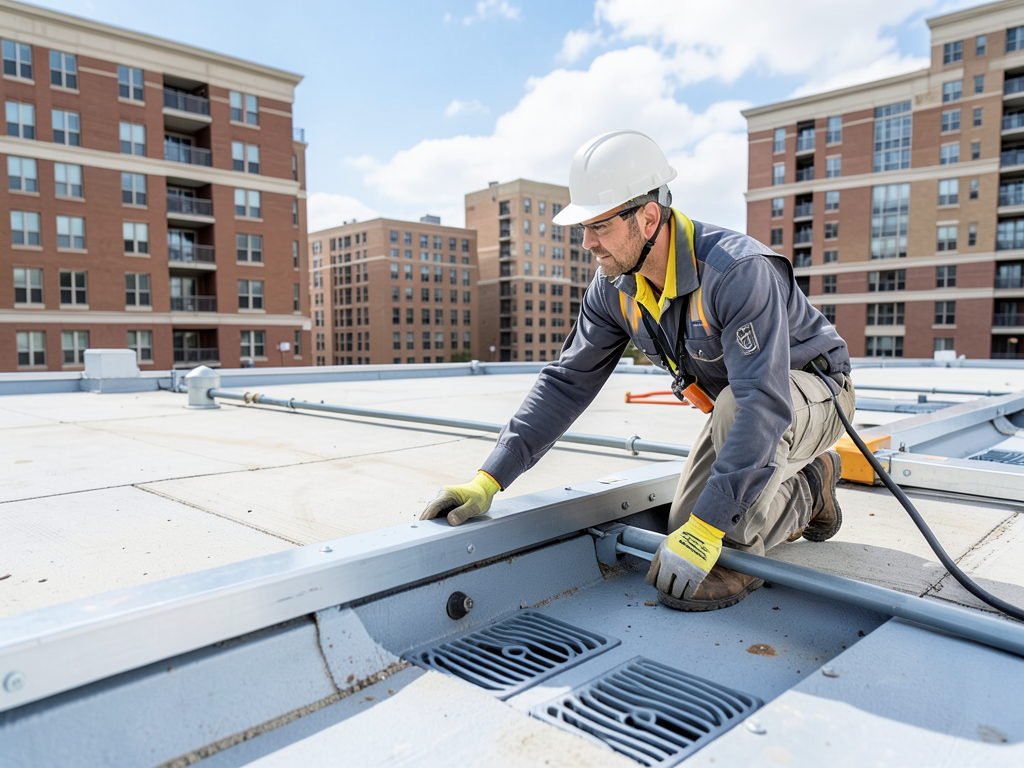
Internal drains sit flush with the roof surface and connect to pipes running through the building. We install these in high-traffic areas where scuppers would create trip hazards. The drains include strainers that catch debris before it enters the plumbing system.
Key benefit: Internal drains keep the roof surface clear for maintenance access and tenant use.
Scuppers
Scuppers are openings in parapet walls that allow water to exit the roof. We install these along wall edges where roof slopes direct water toward the perimeter. Scuppers work well for buildings with parapet walls and require less internal plumbing than roof drains.
Maintenance note: Scuppers need regular cleaning to prevent clogging from Oklahoma’s spring debris.
Gutters and Downspouts
Commercial-grade gutters handle the volume of water from large apartment roofs. We install oversized gutters with reinforced hangers that withstand Oklahoma’s high winds. Downspouts connect to underground drainage systems that direct water away from foundations.. Read more about Protecting the Flat and Low-Sloped Roofs of Mid-Century Homes in the Plaza District.
Installation detail: We use 6-inch commercial gutters for apartment buildings instead of residential 5-inch systems.
Siphonic Roof Drainage
Siphonic systems use special roof outlets that create a vacuum effect, allowing water to drain faster than gravity alone. These systems reduce the number of drains needed and work well for large flat roofs common in apartment complexes.
Performance factor: Siphonic systems drain 10-15 times faster than conventional gravity drainage.
Why OKC Weather Demands Superior Roof Drainage
Oklahoma City’s climate creates unique challenges for apartment roof drainage. Spring thunderstorms can drop several inches of rain in hours, overwhelming inadequate systems.
Oklahoma receives an average of 36 inches of rain annually, with most falling during April and May. This concentrated rainfall period means drainage systems must handle peak volumes, not just average conditions.
Oklahoma’s clay soil expands when wet and contracts when dry. This movement can shift building foundations, creating low spots on flat roofs where water collects. We see this frequently in Midtown buildings constructed on the area’s expansive red clay.
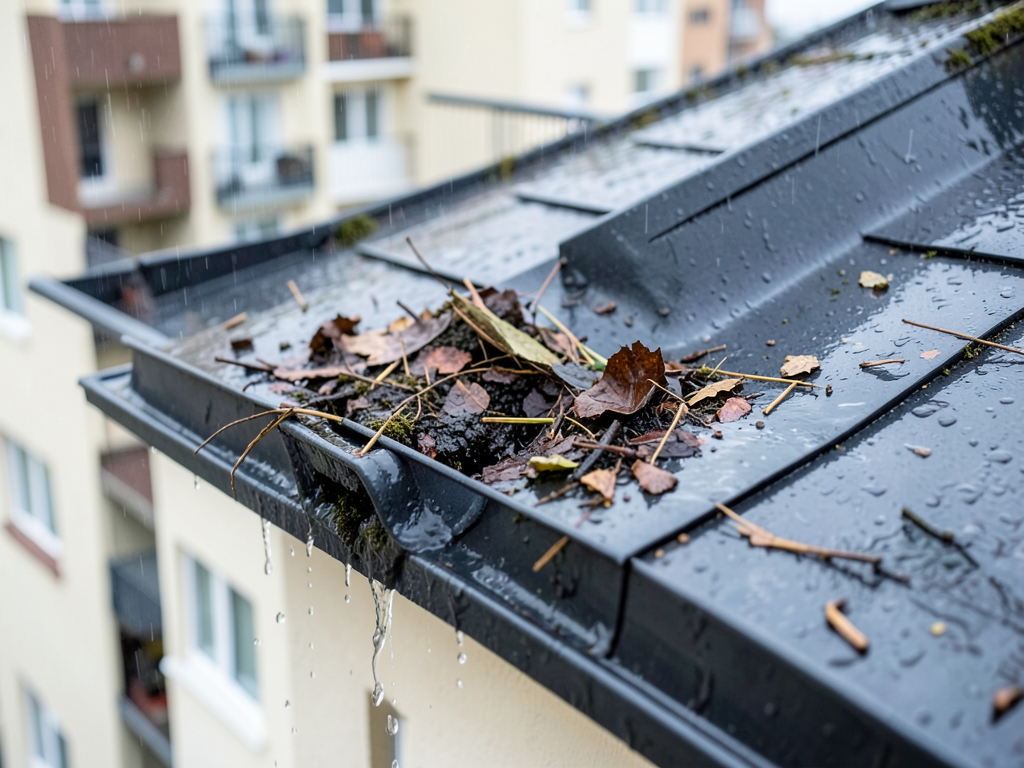
High winds common in Tornado Alley can blow debris onto roofs, clogging drains and scuppers. Tree pollen in spring and leaves in fall create seasonal clogging patterns we address with preventative maintenance schedules.
Identifying and Fixing ‘Ponding Water’ on Flat Roofs
Ponding water sits on a roof for more than 48 hours after rain stops. This condition indicates drainage problems that worsen over time.
We diagnose ponding using a simple water level test. After rain, we measure standing water depth at multiple locations. Areas holding water deeper than 1/4 inch need correction.
Common causes of ponding include:
- Compressed insulation from foot traffic
- Structural settling creating low spots
- Improper roof slope during original construction
- Debris blocking drainage paths
We fix ponding through several methods. Adding tapered insulation creates positive slope toward drains. Installing additional drains provides more exit points for water. Cleaning and repairing existing drainage components often resolves the issue. EPA information on expansive soils.
Diagnostic test: We use a 6-foot level to check roof slope. A properly sloped roof should show at least 1/4 inch decline per foot toward drains.
Maintenance Programs for Property Managers
Preventative maintenance prevents emergency repairs and tenant complaints. We offer quarterly maintenance programs specifically for apartment property managers.
Spring maintenance (March-April) focuses on clearing winter debris and checking for freeze damage. We clean all drains, scuppers, and gutters. This timing prevents problems during Oklahoma’s heaviest rainfall season.
Summer maintenance (June-July) inspects for UV damage and checks all flashings around roof penetrations. We verify that all drainage components remain secure after spring storms.
Fall maintenance (September-October) removes leaves and organic debris that accumulate in drainage systems. We inspect roof membranes for damage that could worsen during winter freezes.
Winter maintenance (December-January) checks for ice dam formation and ensures all drains remain clear. We inspect insulation for moisture that could indicate drainage problems.
Maintenance checklist: Clean drains, inspect flashings, check slope, verify downspout connections, test overflow systems.
Oklahoma City Building Codes and Compliance
Oklahoma City follows the International Building Code with local amendments. For apartment buildings, secondary overflow drainage systems are mandatory. Why Local Nichols Hills Residents Choose Our Luxury Roofing Team.
Section 1503 of the Oklahoma City Building Code requires secondary overflow drains when parapets or other roof edge conditions prevent water from freely running off the roof edge. These overflow systems activate when primary drains clog.
Secondary overflow drains must:
- Be placed at least 2 inches above the roof surface
- Drain to a location where overflow won’t damage the building
- Have a capacity equal to the primary drainage system
- Be separate from the primary drainage system
We ensure all installations meet these requirements. Missing secondary overflow systems can result in building code violations and insurance issues.
Code requirement: Buildings with roof areas over 20,000 square feet require engineered drainage calculations per IBC Table 1106.3.
Comparing Drainage System Options for Apartments
| System Type | Best For | Cost Range | Maintenance Needs |
|---|---|---|---|
| Internal Drains | High-traffic roofs | $15-25 per square foot | Quarterly cleaning |
| Scuppers | Parapet walls | $8-12 per linear foot | Bi-annual cleaning |
| Siphonic | Large flat roofs | $20-30 per square foot | Annual inspection |
| Enhanced Gutters | Retrofit projects | $5-8 per linear foot | Quarterly cleaning |
Emergency Drainage Repairs
When drainage systems fail, quick response prevents tenant displacement and property damage. We offer 24/7 emergency service for apartment managers in Midtown.
Common emergency situations include:
- Clogged drains during heavy rain
- Collapsed pipes from tree root intrusion
- Ice blockages in winter
- Storm damage to drainage components
Our emergency response includes temporary water diversion, clearing blockages, and repairing damaged components. We work quickly to restore drainage before water enters the building.
Emergency process:
- Assess the immediate threat
- Implement temporary drainage solution
- Clear the primary blockage
- Repair or replace damaged components
- Test the complete system
Cost Factors for Apartment Drainage Projects
Several factors affect drainage project costs. Roof size determines the total linear feet of drains, scuppers, or gutters needed. Building height affects labor costs for installation and material transport.
Existing conditions impact costs significantly. Removing old drainage systems adds labor. Repairing roof damage discovered during installation increases project scope. Working around existing equipment and tenant-occupied spaces requires careful planning.
Material quality affects both initial cost and long-term maintenance. Commercial-grade components cost more upfront but require less frequent replacement. We help property managers balance initial investment against lifecycle costs. What You Can Expect to Pay for a Roof Replacement in Edmond.
Cost-saving tip: Scheduling drainage work during planned roof maintenance reduces overall project costs by sharing setup and teardown expenses.
Tenant Impact and Communication
Apartment drainage work affects tenants through noise, access restrictions, and potential water service interruptions. We minimize these impacts through careful scheduling and communication.
We notify tenants at least 48 hours before work begins. Notices include work timing, affected areas, and contact information for questions. For projects lasting more than one day, we provide daily updates on progress and schedule changes.
Noise considerations guide our work scheduling. We avoid early morning work in residential areas. For buildings near hospitals or schools, we coordinate with property managers to minimize disruption during peak quiet hours. High Quality Residential Roofing Services in The Village.
Access management ensures tenant safety during construction. We secure work areas with barriers and provide alternative routes when normal pathways close. For buildings with secure parking, we coordinate vehicle access with property management.
Long-term Performance and Warranty
Quality drainage installation includes manufacturer warranties on components and workmanship guarantees on installation. We provide documentation for all warranties and maintenance requirements.
Most drainage components carry 10-20 year warranties when properly installed. Pipe systems often include lifetime warranties on materials. Workmanship guarantees typically cover 5 years.
Proper maintenance preserves warranty coverage. Many manufacturers require documented maintenance to keep warranties valid. We provide maintenance logs and inspection reports to support warranty claims if needed.
Warranty requirement: Annual professional inspection by certified technicians maintains most manufacturer warranties.
Frequently Asked Questions
How often should apartment building roof drains be cleaned?
Apartment building roof drains need cleaning at least quarterly, with additional cleaning after major storms or during heavy pollen seasons. Buildings with many trees nearby may need monthly cleaning during fall.
What are signs of drainage problems in apartment buildings?
Signs include water stains on ceilings below roof areas, musty odors in upper floor units, visible ponding on the roof after rain, and slow-draining sinks or tubs that may indicate connected plumbing issues.
How much does it cost to install new drainage on an apartment building?
Costs range from $8-30 per square foot depending on the system type, building height, and existing conditions. A typical 10,000 square foot apartment roof might cost $80,000-300,000 for complete drainage replacement.
Can drainage problems cause foundation issues?
Yes. Poor roof drainage can saturate soil around foundations, causing expansion in clay soils. This movement can crack foundations and create structural issues throughout the building.
Do apartment buildings need special drainage for fire code compliance?
Fire codes require proper drainage to prevent water accumulation that could interfere with fire suppression systems. Some municipalities also require drainage to prevent ice formation on walking surfaces.
Ready to Fix Your Apartment Building Drainage?
Don’t wait for the next Oklahoma storm to reveal drainage problems. Call (405) 507-3933 today to schedule your apartment building drainage inspection. We’ll identify current issues and recommend solutions that protect your property and keep your tenants safe and dry.
Our team understands the unique challenges of apartment building drainage in Midtown Oklahoma City. We provide fast, professional service with minimal tenant disruption. Contact us now before small drainage issues become major structural problems. For more information, visit 2018 International Building Code Chapter 15.
You may also find this helpful. Roofing Options for Your New Accessory Dwelling Unit or Backyard Office in the Wheeler District.
You may also find this helpful. Preserving the Integrity of Historic Commercial Roofs Along Capitol Hill’s Main Street.
{
“@context”: “https://schema.org”,
“@type”: “BlogPosting”,
“headline”: “Flat Roof Drainage Solutions for Apartment Managers and Landlords in Midtown”,
“description”: “Expert flat roof drainage solutions for apartment buildings in Midtown OKC. Prevent ponding water and code violations with professional drainage systems designed for Oklahoma’s climate.”,
“wordCount”: 1691,
“datePublished”: “2026-05-12T11:53:00.000Z”,
“dateModified”: “2026-05-12T11:53:00.000Z”,
“inLanguage”: “en-US”,
“mainEntityOfPage”: {
“@type”: “WebPage”,
“@id”: “https://unitedroofingoklahomacity.com”
},
“publisher”: {
“@type”: “LocalBusiness”,
“name”: “United Roofing Oklahoma City”,
“url”: “https://unitedroofingoklahomacity.com”
},
“author”: {
“@type”: “Organization”,
“name”: “United Roofing Oklahoma City”,
“url”: “https://unitedroofingoklahomacity.com”
},
“image”: {
“@type”: “ImageObject”,
“url”: “https://unitedroofingoklahomacity.com/wp-content/uploads/2026/03/flat-roof-drainage-solutions-for-apartment-manager-1.png”
}
}
{
“@context”: “https://schema.org”,
“@type”: “RoofingContractor”,
“name”: “United Roofing Oklahoma City”,
“url”: “https://unitedroofingoklahomacity.com”,
“address”: {
“@type”: “PostalAddress”,
“addressLocality”: “Oklahoma City”
},
“areaServed”: {
“@type”: “City”,
“name”: “Oklahoma City”
}
}
{
“@context”: “https://schema.org”,
“@type”: “FAQPage”,
“mainEntity”: [
{
“@type”: “Question”,
“name”: “How often should apartment building roof drains be cleaned?”,
“acceptedAnswer”: {
“@type”: “Answer”,
“text”: “Apartment building roof drains need cleaning at least quarterly, with additional cleaning after major storms or during heavy pollen seasons. Buildings with many trees nearby may need monthly cleaning during fall.”
}
},
{
“@type”: “Question”,
“name”: “What are signs of drainage problems in apartment buildings?”,
“acceptedAnswer”: {
“@type”: “Answer”,
“text”: “Signs include water stains on ceilings below roof areas, musty odors in upper floor units, visible ponding on the roof after rain, and slow-draining sinks or tubs that may indicate connected plumbing issues.”
}
},
{
“@type”: “Question”,
“name”: “How much does it cost to install new drainage on an apartment building?”,
“acceptedAnswer”: {
“@type”: “Answer”,
“text”: “Costs range from $8-30 per square foot depending on the system type, building height, and existing conditions. A typical 10,000 square foot apartment roof might cost $80,000-300,000 for complete drainage replacement.”
}
},
{
“@type”: “Question”,
“name”: “Do apartment buildings need special drainage for fire code compliance?”,
“acceptedAnswer”: {
“@type”: “Answer”,
“text”: “Fire codes require proper drainage to prevent water accumulation that could interfere with fire suppression systems. Some municipalities also require drainage to prevent ice formation on walking surfaces.”
}
},
{
“@type”: “Question”,
“name”: “Ready to Fix Your Apartment Building Drainage?”,
“acceptedAnswer”: {
“@type”: “Answer”,
“text”: “Don’t wait for the next Oklahoma storm to reveal drainage problems. Call (405) 507-3933 today to schedule your apartment building drainage inspection. We’ll identify current issues and recommend solutions that protect your property and keep your tenants safe and dry.”
}
}
]
}
{
“@context”: “https://schema.org”,
“@type”: “BreadcrumbList”,
“itemListElement”: [
{
“@type”: “ListItem”,
“position”: 1,
“name”: “Home”,
“item”: “https://unitedroofingoklahomacity.com”
},
{
“@type”: “ListItem”,
“position”: 2,
“name”: “Blog”,
“item”: “https://unitedroofingoklahomacity.com/blog”
},
{
“@type”: “ListItem”,
“position”: 3,
“name”: “Flat Roof Drainage Solutions for Apartment Managers and Landlords in Midtown”
}
]
}
{
“@context”: “https://schema.org”,
“@type”: “Service”,
“serviceType”: “Roofing”,
“provider”: {
“@type”: “LocalBusiness”,
“name”: “United Roofing Oklahoma City”,
“url”: “https://unitedroofingoklahomacity.com”
},
“areaServed”: {
“@type”: “City”,
“name”: “Oklahoma City”
},
“description”: “Expert flat roof drainage solutions for apartment buildings in Midtown OKC. Prevent ponding water and code violations with professional drainage systems designed for Oklahoma’s climate.”
}