
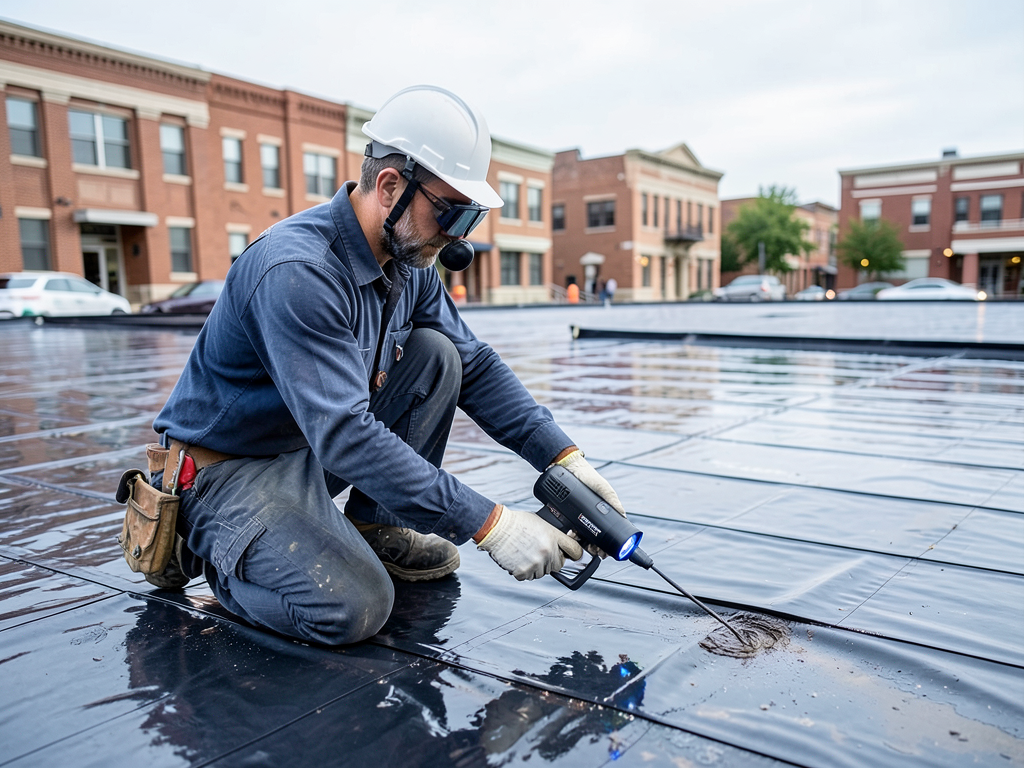
Stopping Water from Pooling on Your Flat Roof in the Bricktown District
Water pooling on your flat roof is more than just an eyesore. It creates a serious structural threat that can lead to leaks, material failure, and expensive repairs. In Oklahoma City’s Bricktown District, where commercial buildings line historic streets and heavy spring rains are common, ponding water can become a recurring nightmare. The good news is that you can fix it with the right drainage solutions and maintenance plan. Oklahoma Uniform Building Code Commission.
Flat roofs in Bricktown face unique challenges. The area’s mix of historic warehouses converted to lofts and modern commercial buildings creates varied drainage needs. Add Oklahoma’s extreme weather patterns and you have a recipe for water management problems. This guide will show you how to identify ponding water causes and implement effective solutions that protect your investment.. Read more about How Cottonwood Seeds and Sap Can Clog Your Drainage and Rot Your Roof in Valley Brook.
What Causes Ponding Water on Flat Roofs
Understanding why water pools on your roof is the first step to solving the problem. Several factors contribute to poor drainage in the Bricktown area.
Clogged drainage systems are the most common culprit. Oklahoma’s spring storms bring heavy debris that blocks scuppers and internal drains. When water cannot escape, it sits on your roof until it evaporates or finds a way inside.
Structural settling creates low spots where water collects. Bricktown’s historic buildings often have aged support structures that sag over time. The clay soil common in Oklahoma City expands and contracts with moisture changes, causing foundation shifts that affect roof slopes.
Improper installation leaves roofs without adequate pitch. Building codes require minimum slopes for flat roofs, but older structures may not meet current standards. Without proper drainage angles, water has nowhere to go.
Compressed insulation reduces roof height and creates depressions. Heavy foot traffic or equipment storage on roofs damages insulation layers. Once compressed, these areas become natural collection points for rainwater.
The Hidden Dangers of Ponding Water
Many building owners underestimate how quickly ponding water becomes dangerous. The weight alone can cause structural damage that requires expensive repairs.
One inch of standing water weighs approximately 5.2 pounds per square foot. A 1,000-square-foot ponding area with just one inch of water adds over 5,000 pounds of load to your roof structure. During Oklahoma’s rainy season, water depths can reach several inches, multiplying the weight dramatically.
UV radiation accelerates damage to saturated materials. Oklahoma’s intense summer sun heats ponding water, creating a magnifying effect that breaks down roof membranes faster than normal exposure. This thermal shock cycle weakens materials and creates cracks.
Moisture penetration leads to interior damage. Water that sits on your roof will eventually find its way through seams and flashing. Once inside, it damages ceilings, walls, and electrical systems. Bricktown’s historic buildings are particularly vulnerable to water damage.
Mosquito breeding creates health hazards. Stagnant water becomes a breeding ground for mosquitoes, increasing the risk of West Nile Virus in Oklahoma. Building owners face liability issues when ponding water creates pest problems.
Effective Solutions for Bricktown Flat Roofs
Fixing ponding water requires a systematic approach. Here are proven solutions that work for Oklahoma City’s commercial buildings.
Installing tapered insulation systems creates positive drainage slopes. These pre-cut panels add height to low areas while maintaining proper insulation values. A typical system provides 1/4 inch of slope per foot, directing water toward drains or scuppers.
Roof crickets and saddles divert water around obstacles. These small raised structures channel water around HVAC units, skylights, and other rooftop equipment. In Bricktown’s mixed-use buildings, crickets prevent water from pooling behind equipment.
Adjusting scupper heights improves water flow. Many older buildings have scuppes set too low for modern drainage needs. Raising scupper openings by just a few inches can eliminate ponding in affected areas.
Regular drain maintenance prevents clogs. Oklahoma’s spring storms bring leaves, twigs, and debris that block drainage paths. Quarterly cleaning of all drains, scuppes, and gutters keeps water moving off your roof.
Adding internal drains provides backup drainage. When primary drainage fails, secondary drains prevent catastrophic ponding. Modern internal drain systems handle higher water volumes than traditional scuppes.
Oklahoma Weather Impact on Flat Roof Drainage
Bricktown’s location in Oklahoma City means your flat roof must handle extreme weather conditions. Understanding these impacts helps you design better drainage systems.
Oklahoma’s freeze-thaw cycles create unique challenges. Water that freezes in drainage paths expands and cracks materials. When it thaws, it leaves larger openings for the next freeze. This cycle damages scuppes, drains, and roof membranes.
Spring thunderstorms bring intense rainfall. Oklahoma City receives an average of 36 inches of rain annually, with most falling between April and June. These concentrated storms overwhelm poorly designed drainage systems.
Hail damages drainage components. Oklahoma’s hail season can destroy scuppes, gutters, and drain covers. After a hailstorm, even minor damage can prevent proper water flow.
High winds blow debris onto roofs. Bricktown’s urban setting means your roof collects trash, leaves, and other materials that block drainage. Wind-driven rain also tests the effectiveness of your drainage design.
Building Code Requirements for Flat Roof Drainage
Oklahoma City building codes specify minimum requirements for flat roof drainage. Understanding these requirements helps you ensure your roof meets safety standards.
The Oklahoma Uniform Building Code Commission requires minimum 1/4 inch per foot slope for flat roofs. This translates to a 2 percent grade that ensures water flows toward drainage points. Older buildings may not meet this requirement.
Commercial buildings must have redundant drainage systems. The code requires at least two separate drainage paths to prevent complete system failure. This means combining scuppes with internal drains or multiple drain lines.
Drainage capacity calculations depend on roof area and local rainfall rates. Engineers must design systems to handle maximum expected rainfall based on Oklahoma City’s climate data. Undersized drains create ponding even with proper slopes. Why Local Nichols Hills Residents Choose Our Luxury Roofing Team.
Ice and water shield requirements protect against freeze damage. Oklahoma City codes mandate ice and water shield in valleys and around penetrations. This prevents water infiltration when drainage systems freeze.
Diagnostic Tools for Identifying Ponding Problems
Professional roofers use specific tools to diagnose ponding water issues. Understanding these diagnostic methods helps you communicate with contractors. The Best Norman OK Roofers for Emergency Storm Damage Fixes.
Moisture meters detect water saturation in roof materials. These devices measure moisture content at different depths, identifying areas where water has penetrated beyond the surface. Readings above 15 percent indicate serious moisture problems.
Laser levels map roof slopes accurately. By establishing a reference point and measuring height variations across the roof, technicians identify low spots that cause ponding. Even small depressions can hold significant water.
Thermal imaging reveals temperature differences caused by moisture. Wet areas retain heat differently than dry materials, making them visible on infrared cameras. This technology identifies hidden moisture problems before they cause visible damage.
Water testing confirms drainage system functionality. Technicians flood specific roof areas to observe how water flows toward drains. This test reveals design flaws and clogs that might not be visible during normal conditions.
Maintenance Schedule for Flat Roof Drainage Systems
Regular maintenance prevents most ponding water problems. A structured maintenance schedule keeps your drainage system functioning properly.
Quarterly inspections catch problems early. Check drains, scuppes, and gutters for debris buildup. Look for signs of membrane damage around drainage points. Oklahoma’s changing seasons mean different debris types each quarter.
Post-storm inspections are critical after severe weather. Oklahoma’s spring storms can damage drainage components. Check for displaced drain covers, clogged scuppes, and hail damage to membranes.
Annual professional inspections identify developing problems. Roofing contractors use specialized equipment to assess drainage system integrity. They can spot issues like compressed insulation or structural settling that building owners might miss.
Seasonal preparation protects against weather extremes. Before Oklahoma’s rainy season, clear all drainage paths. Before winter, ensure ice and water shield is intact. These preparations prevent seasonal ponding problems.
Cost Factors for Ponding Water Repairs
Repair costs vary based on the extent of ponding problems and chosen solutions. Understanding cost factors helps you budget for repairs.
Diagnostic services typically cost $200-$500. Professional roofers charge for moisture testing, slope mapping, and drainage analysis. This investment identifies the exact cause of ponding before repairs begin.
Tapered insulation installation ranges from $3-$8 per square foot. Material costs depend on thickness and R-value requirements. Installation complexity affects labor costs, especially on occupied buildings.
Drain system upgrades cost $500-$2,000 per drain. This includes removing old components, installing new drains, and ensuring proper connection to existing drainage paths. Multiple drains may be needed for complete solutions.
Structural repairs add significant costs. If ponding has caused joist damage or sagging, repairs can cost $10-$30 per square foot. These repairs require permits and may involve temporary building evacuation.
Emergency Response to Severe Ponding
When ponding water becomes severe, immediate action prevents catastrophic damage. Know the warning signs and emergency procedures.
Sagging ceilings indicate serious structural stress. Water weight can cause roof decks to deflect, creating visible ceiling dips. This situation requires immediate professional intervention to prevent collapse.
Active leaks during rain signal drainage failure. Water finding its way inside means your drainage system cannot handle current conditions. Emergency pumping or temporary drainage may be necessary. Finding a Reliable Roofing Company Near You in Moore Oklahoma.
Standing water over 6 inches deep poses immediate risks. At this depth, water weight becomes critical for most roof structures. Emergency pumping removes water while permanent solutions are planned.
Electrical system exposure creates fire hazards. Water infiltration near electrical equipment requires immediate shutdown and professional assessment. This situation can escalate from ponding to emergency very quickly.
Long-term Prevention Strategies
Preventing ponding water requires ongoing attention and strategic planning. Implement these strategies to protect your investment.
Design upgrades during roof replacement eliminate chronic problems. When replacing your roof, incorporate improved drainage design based on current usage patterns and equipment placement. Modern materials and designs handle Oklahoma’s climate better than older systems. What You Can Expect to Pay for a Roof Replacement in Edmond.
Equipment placement affects drainage efficiency. HVAC units, satellite dishes, and other rooftop equipment create obstacles for water flow. Strategic placement and crickets prevent water from pooling behind equipment.
Roof access policies prevent damage. Limiting foot traffic and equipment storage protects insulation from compression. Establish clear policies for maintenance personnel and tenants who access the roof.
Monitoring systems provide early warning. Electronic sensors can detect water accumulation and alert building managers before ponding becomes severe. These systems pay for themselves by preventing major damage.
Choosing the Right Contractor for Ponding Repairs
Not all roofing contractors have experience with ponding water solutions. Select a contractor with specific expertise in flat roof drainage.
Commercial experience matters for Bricktown buildings. Look for contractors who have worked on similar structures in the area. They understand local building codes and weather challenges specific to Oklahoma City.
Diagnostic capabilities separate good contractors from great ones. The best contractors use moisture meters, laser levels, and thermal imaging to identify problems before proposing solutions. Avoid contractors who recommend solutions without proper diagnosis.
Warranty considerations affect long-term value. Quality contractors offer warranties on both materials and workmanship. Read warranty terms carefully, especially regarding ponding water exclusions. High Quality Residential Roofing Services in The Village.
Insurance verification protects your investment. Ensure contractors carry proper liability and workers’ compensation insurance. This protects you from liability if accidents occur during ponding repairs.
Frequently Asked Questions
How long can water sit on a flat roof before it becomes a problem?
According to NRCA standards, water that remains on a roof for more than 48 hours is considered ponding. This timeframe is critical because it marks when structural loads become excessive and material degradation accelerates.
Can I fix ponding water myself or do I need a professional?
Minor debris removal is safe for building owners, but structural repairs and drainage system modifications require professional expertise. Incorrect repairs can void warranties and create safety hazards. Professional diagnosis ensures you address the actual cause rather than symptoms.
How much does it cost to fix ponding water on a commercial flat roof?
Costs range from $500 for simple drain cleaning to $20,000+ for comprehensive drainage system redesigns. Most building owners spend $3,000-$8,000 on effective ponding solutions. The exact cost depends on roof size, problem severity, and chosen repair methods.
Will my insurance cover ponding water damage?
Most commercial insurance policies cover sudden damage from ponding water but not damage from neglect or lack of maintenance. Document your maintenance efforts and address ponding issues promptly to maintain coverage eligibility.
How often should I inspect my flat roof for ponding issues?
Quarterly inspections are minimum, with additional checks after severe storms. Oklahoma’s climate requires more frequent attention than milder regions. Annual professional inspections catch problems that building owners might miss.
Take Action Before the Next Storm
Ponding water on your flat roof is not just a nuisance. It is a structural threat that grows more expensive to fix the longer you wait. Bricktown’s commercial buildings face unique challenges from Oklahoma’s extreme weather and historic construction methods.
Don’t wait for the next spring storm to reveal your roof’s weaknesses. A simple inspection can identify problems before they cause interior damage or structural failure. The cost of prevention is always less than emergency repairs.
Call (405) 507-3933 today to schedule your free drainage slope analysis. Our experienced technicians will diagnose your ponding problems and recommend effective solutions tailored to your building’s specific needs. We serve all of Oklahoma City including the Bricktown District, with same-day service available for urgent situations.
Pick up the phone and call (405) 507-3933 before the next Oklahoma storm hits. Your roof can’t wait until water is pouring through your ceiling to get the attention it needs.
Don’t let ponding water threaten your building’s integrity. Call (405) 507-3933 now for your free inspection and take the first step toward a dry, safe roof. For more information, visit National Roofing Contractors Association.
You may also find this helpful. Silicone Versus Acrylic Roof Coatings for Your Commercial Building in Downtown OKC.
{
“@context”: “https://schema.org”,
“@type”: “BlogPosting”,
“headline”: “Stopping Water from Pooling on Your Flat Roof in the Bricktown District”,
“description”: “Bricktown flat roof owners face unique ponding water challenges. Learn how Oklahoma City’s climate and building codes affect your drainage system and what to do about it.”,
“wordCount”: 2318,
“datePublished”: “2026-04-10T13:02:00.000Z”,
“dateModified”: “2026-04-10T13:02:00.000Z”,
“inLanguage”: “en-US”,
“mainEntityOfPage”: {
“@type”: “WebPage”,
“@id”: “https://unitedroofingoklahomacity.com”
},
“publisher”: {
“@type”: “LocalBusiness”,
“name”: “United Roofing Oklahoma City”,
“url”: “https://unitedroofingoklahomacity.com”
},
“author”: {
“@type”: “Organization”,
“name”: “United Roofing Oklahoma City”,
“url”: “https://unitedroofingoklahomacity.com”
},
“image”: {
“@type”: “ImageObject”,
“url”: “https://unitedroofingoklahomacity.com/wp-content/uploads/2026/03/stopping-water-from-pooling-on-your-flat-roof-in-t-1.png”
}
}
{
“@context”: “https://schema.org”,
“@type”: “RoofingContractor”,
“name”: “United Roofing Oklahoma City”,
“url”: “https://unitedroofingoklahomacity.com”,
“address”: {
“@type”: “PostalAddress”,
“addressLocality”: “Oklahoma City”
},
“areaServed”: {
“@type”: “City”,
“name”: “Oklahoma City”
}
}
{
“@context”: “https://schema.org”,
“@type”: “FAQPage”,
“mainEntity”: [
{
“@type”: “Question”,
“name”: “How long can water sit on a flat roof before it becomes a problem?”,
“acceptedAnswer”: {
“@type”: “Answer”,
“text”: “According to NRCA standards, water that remains on a roof for more than 48 hours is considered ponding. This timeframe is critical because it marks when structural loads become excessive and material degradation accelerates.”
}
},
{
“@type”: “Question”,
“name”: “Can I fix ponding water myself or do I need a professional?”,
“acceptedAnswer”: {
“@type”: “Answer”,
“text”: “Minor debris removal is safe for building owners, but structural repairs and drainage system modifications require professional expertise. Incorrect repairs can void warranties and create safety hazards. Professional diagnosis ensures you address the actual cause rather than symptoms.”
}
},
{
“@type”: “Question”,
“name”: “How much does it cost to fix ponding water on a commercial flat roof?”,
“acceptedAnswer”: {
“@type”: “Answer”,
“text”: “Costs range from $500 for simple drain cleaning to $20,000+ for comprehensive drainage system redesigns. Most building owners spend $3,000-$8,000 on effective ponding solutions. The exact cost depends on roof size, problem severity, and chosen repair methods.”
}
},
{
“@type”: “Question”,
“name”: “Will my insurance cover ponding water damage?”,
“acceptedAnswer”: {
“@type”: “Answer”,
“text”: “Most commercial insurance policies cover sudden damage from ponding water but not damage from neglect or lack of maintenance. Document your maintenance efforts and address ponding issues promptly to maintain coverage eligibility.”
}
}
]
}
{
“@context”: “https://schema.org”,
“@type”: “BreadcrumbList”,
“itemListElement”: [
{
“@type”: “ListItem”,
“position”: 1,
“name”: “Home”,
“item”: “https://unitedroofingoklahomacity.com”
},
{
“@type”: “ListItem”,
“position”: 2,
“name”: “Blog”,
“item”: “https://unitedroofingoklahomacity.com/blog”
},
{
“@type”: “ListItem”,
“position”: 3,
“name”: “Stopping Water from Pooling on Your Flat Roof in the Bricktown District”
}
]
}
{
“@context”: “https://schema.org”,
“@type”: “Service”,
“serviceType”: “Roofing”,
“provider”: {
“@type”: “LocalBusiness”,
“name”: “United Roofing Oklahoma City”,
“url”: “https://unitedroofingoklahomacity.com”
},
“areaServed”: {
“@type”: “City”,
“name”: “Oklahoma City”
},
“description”: “Bricktown flat roof owners face unique ponding water challenges. Learn how Oklahoma City’s climate and building codes affect your drainage system and what to do about it.”
}